Last updated November 21, 2026
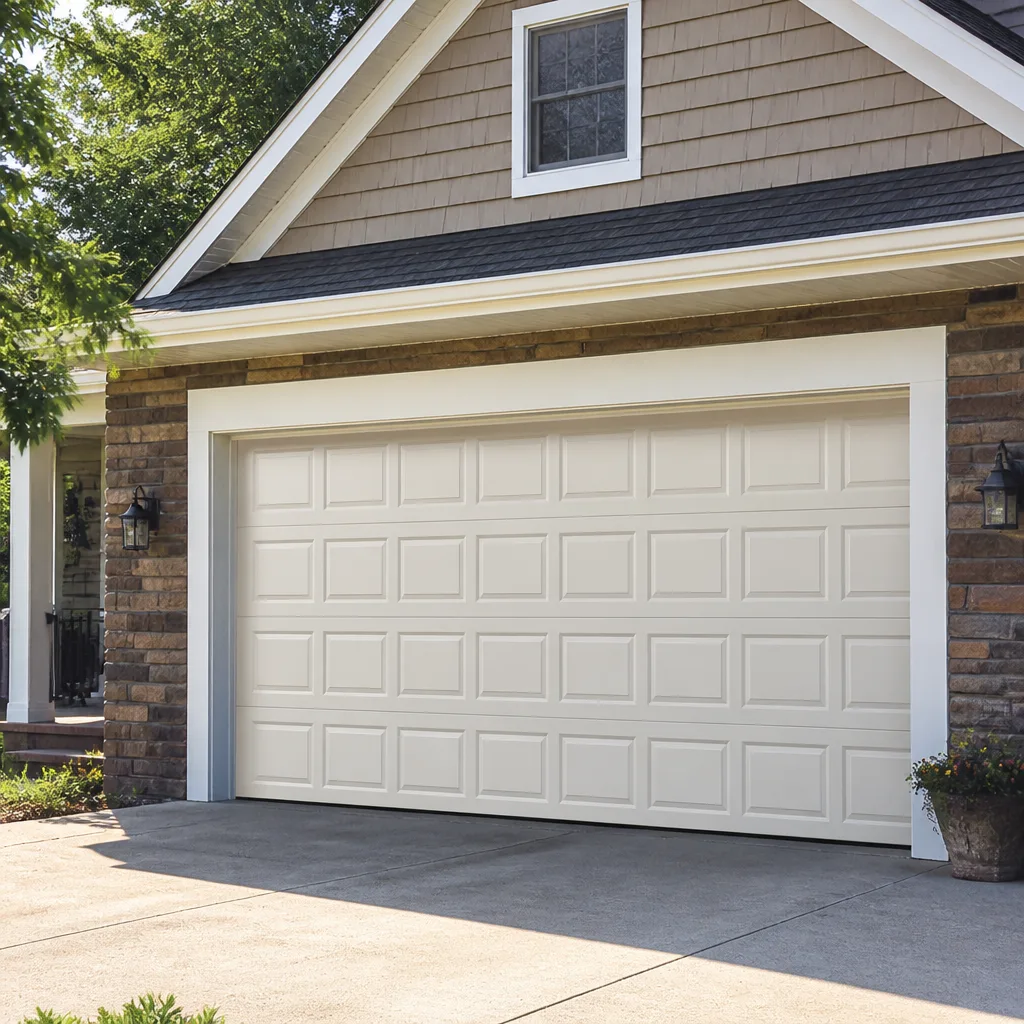 Raised-panel steel
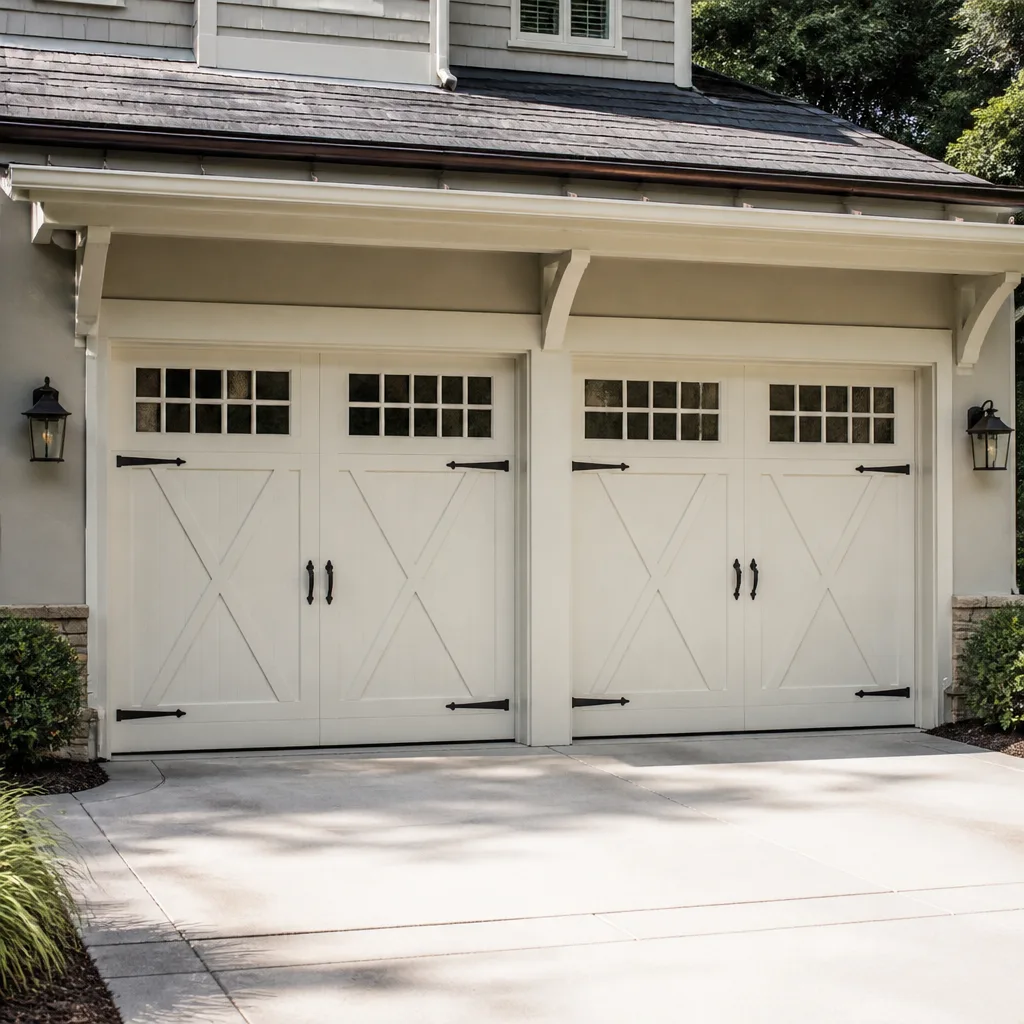 Carriage house
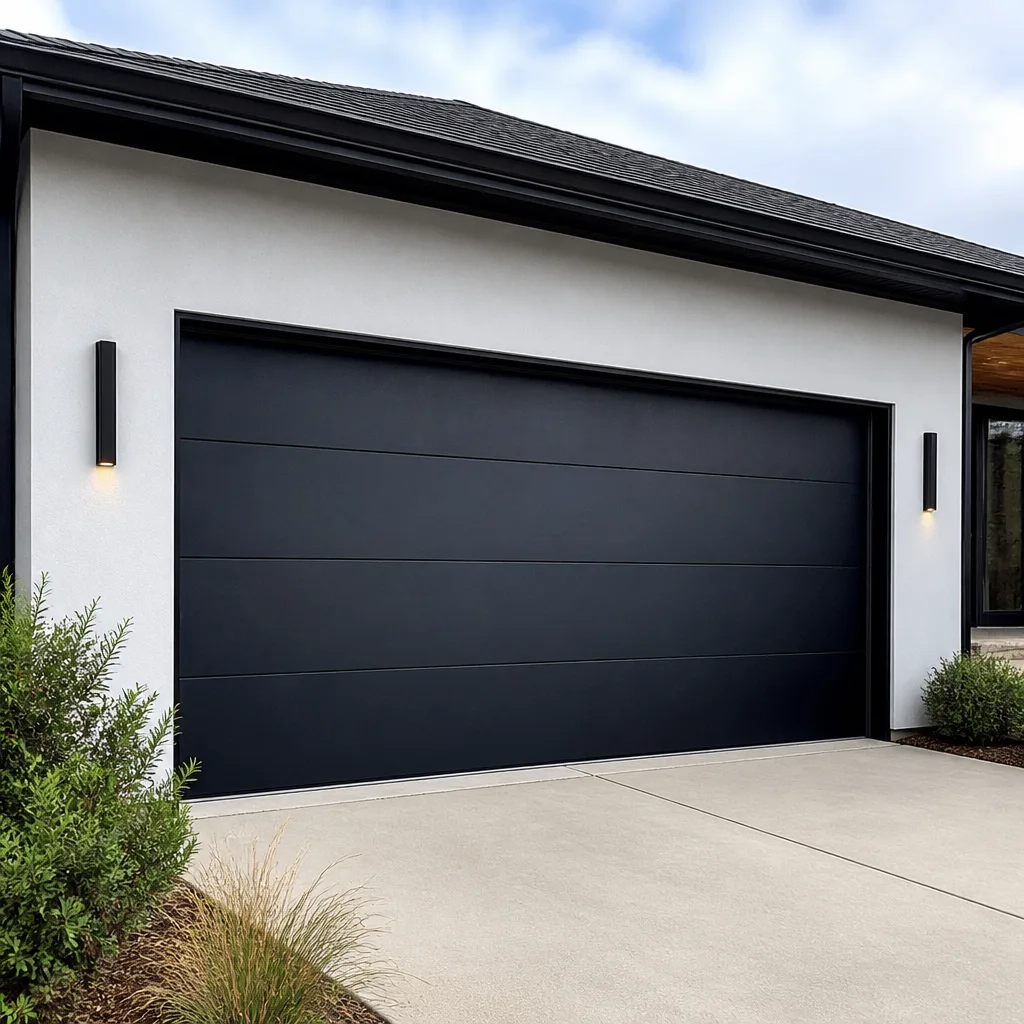 Modern flush
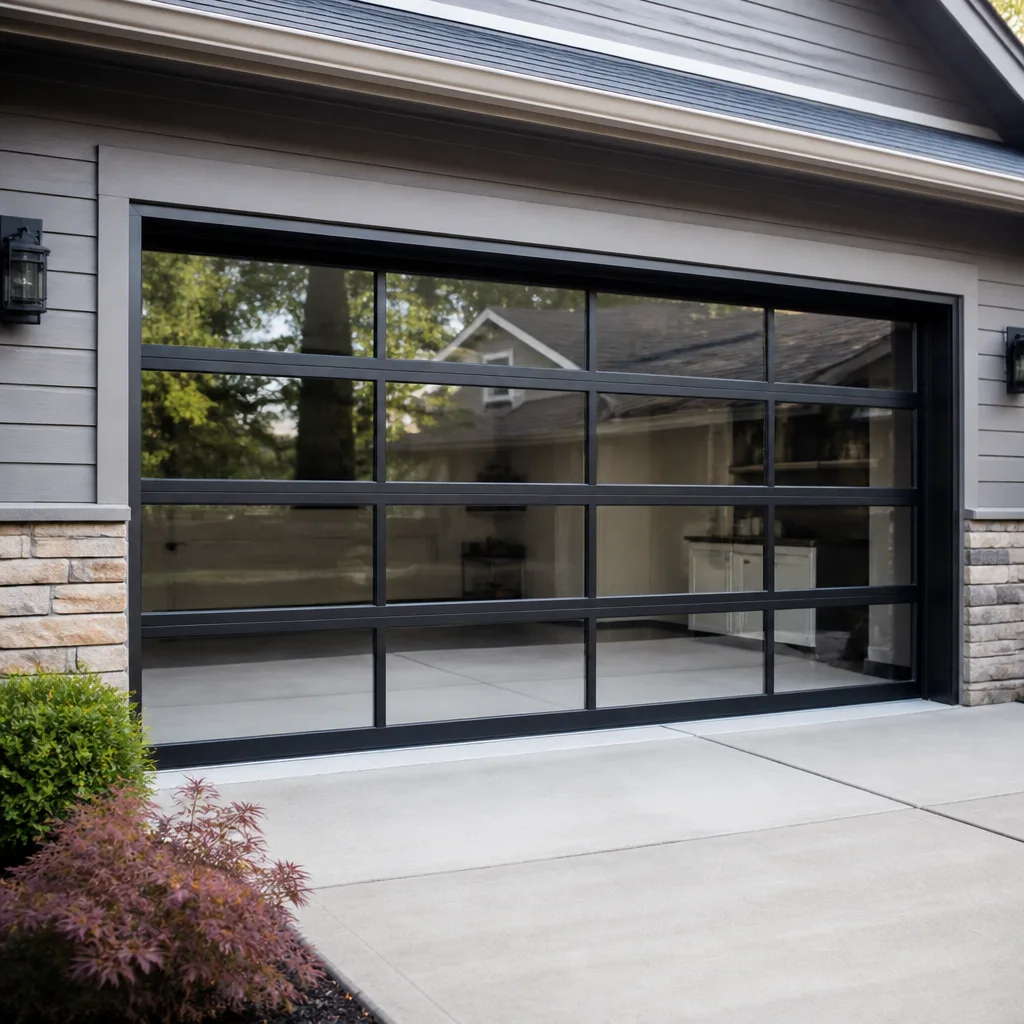 Full-view glass
 LiftMaster openers
 Chamberlain openers
Full 25-point door and opener safety check with every visit - springs, cables, rollers, tracks, and your LiftMaster or Chamberlain opener included
You get a price before we start. It does not change when the pro arrives.
Get your free estimateGarage Door Emergency Preparedness Guide for Co-op City Homes
During a power outage, the most common garage door injury isn’t the outage itself – it’s a homeowner forcing a door with a broken spring because they pulled the emergency release cord without checking cable tension first. That sequence is understandable. The power dies, the door won’t budge, the release cord is right there, and pulling it feels like the obvious move. Pull that cord on a door whose spring has already failed and the full weight of the door can drop without warning. This guide walks through both halves of a garage door emergency in Co-op City: managing the immediate problem without making it worse, and getting the right contractor to the right address with the right parts. You’ll learn manual release procedures by opener brand, how to secure a door that won’t close, and what to tell a dispatcher so the first visit actually solves the problem.
Quick Answer
A garage door emergency in Co-op City comes down to two decisions: whether the door is safe to touch, and who to call. If a spring is broken or a cable is slack, leave the door closed and call a professional – high-tension springs can cause serious injury. If the door is intact and simply stuck, the manual release on most LiftMaster, Chamberlain, and Genie openers lets you operate it by hand. Secure the door, gather your brand and model details, and call (844) 741-4548 so the technician arrives with the right parts.
Styles & brands we work with
- Raised-panel steel
- Carriage house
- Modern flush
- Full-view glass
- LiftMaster openers
- Chamberlain openers
Table of Contents
- The Two Phases of a Garage Door Emergency
- Power Outage Protocol: When to Use the Manual Release
- Manual Release by Opener Brand: LiftMaster, Chamberlain, Genie
- What to Do When a Spring or Cable Fails
- How to Secure a Door That Won’t Close
- What to Tell a Dispatcher for a First-Visit Fix
- Winter, Wind, and Age: Why Doors Fail in Co-op City
- Your One-Page Emergency Reference Card
The Two Phases of a Garage Door Emergency
Every garage door emergency has a before and an after. Phase one is the first ten minutes: what you do, or don’t do, before anyone arrives. Phase two is the call itself – describing the failure accurately enough that the technician shows up prepared. Most homeowners handle phase one badly not because they’re careless but because nobody ever explained the difference between a door that’s stuck and a door that’s compromised.
A stuck door is a mechanical or electrical problem. The door is structurally sound. Something in the opener, the track, or the control circuit has stopped working, and the door can usually be operated by hand once it’s released properly. A compromised door is something else entirely. Springs carry hundreds of pounds of tension. Cables keep that tension balanced on both sides. When one of those parts fails, the door is a heavy object held up by whatever is left, and forcing it can bring the whole panel down.
We sort every call into those two buckets first, because the response is different. A stuck door in Co-op City might be a resolved-by-phone conversation about a disconnected safety sensor. A compromised door needs a technician, and it needs one who knows whether your door is running a Raynor torsion setup or a LiftMaster chain drive with extension springs, because the parts and the procedure are not the same.
Knowing which phase you’re in changes everything that follows. It determines whether you touch the door, what you tell the dispatcher, and how fast you need someone on site. The rest of this guide works through both phases in order.
Power Outage Protocol: When to Use the Manual Release
Grid interruptions in Co-op City are usually short, and most opener batteries or remote memory survive them. The manual release exists for exactly this moment, but it comes with a condition: the door must be mechanically sound before you pull it. Use the release only when the door is intact. Leave it alone if you’ve heard a bang from the ceiling, if the door is crooked in the opening, or if you can see a slack cable hanging on one side.
Here’s the general sequence when the door is sound and the power is out:
- Wait a few minutes first. Many outages are brief. Cycling the wall control after power returns resets most openers without any manual intervention.
- Disconnect the opener from the door, not the door from its springs. The release cord hangs from the trolley. It separates the door from the opener’s drive, not from the spring system. This is the part people misunderstand.
- Pull straight down and slightly toward the door in one firm motion. Most release cords are designed to be pulled once, cleanly. Yanking at an angle can jam the trolley.
- Lift the door by hand slowly. A well-balanced door should lift with one hand and stay put when you let go at any height. If it feels heavy, drops on its own, or slams, the springs are out of balance. Stop and lower it gently.
- Reconnect when power returns by raising the door fully and running the opener once so the trolley re-engages. You’ll hear it click.
If the door won’t stay up when you let go, don’t prop it open with anything and don’t leave it partway. Lower it fully closed and call for service. A door that won’t hold its position has a spring problem, and operating it manually accelerates the wear on the remaining parts.
Manual Release by Opener Brand: LiftMaster, Chamberlain, Genie
The release procedure is similar across the brands most Co-op City garages run, but the cord location and the re-engagement step differ enough to trip people up. We work on LiftMaster, Chamberlain, Genie, and Craftsman openers regularly, and the differences matter when you’re standing on a step stool in the dark.
LiftMaster and Chamberlain
These two share most of their mechanical design, so the procedure is the same. The release cord hangs from the trolley that rides the rail, usually near the door end. Some models use a red handle; older ones use a T-shaped plastic grip. Pull straight down. On units with a cord-and-handle, the trolley stays disengaged until you re-engage it manually by running the opener with the door fully up. If your LiftMaster has a battery backup, the opener may keep working during an outage – check the wall control for a battery indicator before you touch the release at all.
Genie
Genie openers usually place the release cord closer to the motor head, and some models use a slide-lock rather than a pull cord. On screw-drive and belt-drive Genie units, the trolley may need to be re-engaged by hand after you close the door: push the trolley back toward the motor until it clicks. If you’re not sure which style you have, look at the rail. A belt or chain runs the length of a chain-drive or belt-drive unit; a threaded rod means screw drive.
The re-engagement step people miss
After a manual release, the opener and the door are disconnected. Running the opener alone won’t reconnect them. You have to bring the door up to the trolley by hand and run the opener until it catches. If you skip this, the next press of the remote runs the motor against nothing while the door stays down.
One more thing: these steps apply to intact doors only. If your door has a broken spring, the release cord doesn’t make it safe to handle – it makes it heavier. Call before you pull.
What to Do When a Spring or Cable Fails
A broken torsion spring announces itself with a sharp bang from above the door. An extension spring failure is quieter and often shows up as a door that lifts a foot and then won’t go further. Either way, the door is now a dead weight held up by whatever remains, and the safest thing you can do is leave it exactly where it is. Springs are under hundreds of pounds of tension. This is a professional repair, not a weekend project.
Here’s what to do in the first ten minutes:
- Don’t open the door. Leave it closed if it’s already down. If it’s partway up and won’t move, don’t force it down either – call and describe the position.
- Keep people and vehicles clear. A door resting on a failed spring can shift without warning. Park away from it and keep kids from testing it.
- Look without touching. From a safe distance, note whether one side of the door sags, whether a cable is hanging, and whether the door sits level in the opening. That information helps the dispatcher.
- Don’t pull the manual release. We covered this above, but it’s worth repeating here because it’s the mistake that turns a repair into an injury.
- Note your brand and model. A Clopay or Amarr door with a Raynor opener takes different springs and cables than a Wayne Dalton setup. Brand detail on the call saves a return visit.
Springs are matched to door weight, not to door width, so a technician will measure before replacing anything. When you call, know that the price for one spring and the price for a matched pair are different – a pair costs about twice the single-spring figure, and most doors are designed to have both replaced together.
How to Secure a Door That Won’t Close
A door that won’t close is a security problem before it’s a mechanical one. In a Co-op City building, a garage standing open overnight is an open invitation, and in a building shared with neighbors it’s also a shared risk. Securing the door starts with figuring out why it’s staying up.
Run through these checks in order, and stop if any of them involve a moving part under tension:
- Check the safety sensors at the floor. The two small lenses near the bottom of the tracks must be aligned and facing each other. A bumped sensor or a spider web across the lens will stop the door from closing. This is the most common reason a door reverses immediately.
- Check for an obstruction in the path. A loose object, a leaf pile, or a broom handle in the track will trigger the reversal. Clear the path and try again.
- Look at the tracks for damage. A dented or bent vertical track will bind the door on one side. Don’t try to straighten it with a hammer – the door is heavy and the track carries that weight.
- Check the wall control for a lock mode. Many LiftMaster and Chamberlain wall units have a vacation or lock button that stops the opener from responding to remotes. Turn it off.
If none of that helps and the door still won’t come down, close it by hand only if the door is balanced and light. Lower it slowly onto the floor, then secure the bottom rail with a bar or a clamp across the track if you have one – this stops the door lifting if it’s under an odd load. Then call. A door that won’t close because of a sensor or a track is a repair; a door that won’t close because the spring is failing is an emergency.
What to Tell a Dispatcher for a First-Visit Fix
The difference between a one-visit repair and a two-visit repair is usually the information given on the call. A dispatcher who knows the brand, the door type, and the failure symptom can load the right parts and assign a technician who has worked that system before. We service LiftMaster, Chamberlain, Genie, Clopay, Amarr, Wayne Dalton, Craftsman, and Raynor products, and matching the brand up front is what keeps the first visit the only visit.
Have these five things ready before you dial:
- The door brand and model. Check the sticker inside the door panel or on the opener head. If you can’t read it, take a photo.
- The opener brand and type. Belt, chain, or screw drive. The model number on the motor head settles it.
- What happened, in order. “It opened halfway and the motor kept running” is different from “it made a bang and now it’s stuck closed.”
- Where the door is now. Fully closed, fully open, or stuck partway. If it’s partway, say so – that changes how the technician approaches the job.
- Whether you’ve pulled the manual release. If you have, say so. If the door is now disconnected from the opener, that matters.
When you call (844) 741-4548, we’ll walk you through the same checklist in reverse: confirm the brand, confirm the symptom, and confirm the door’s current position. That’s what lets us give you a straight answer on whether it’s a spring, a cable, an opener, or a sensor – and it’s why we ask before we arrive rather than after.
Winter, Wind, and Age: Why Doors Fail in Co-op City
Co-op City winters are hard on garage doors. The freeze-thaw cycle works grease out of rollers, stiffens springs, and tightens the metal of a door that was already running a little heavy. A door that squeaked in October but still worked will start triggering the opener’s force limit in January, and the owner often assumes the opener is failing when the real problem is friction in the door itself.
The other seasonal factor is wind. Co-op City sits on open ground near the water in the northeast Bronx, and a wind load pressed against a door panel puts strain on the bottom bracket, the cables, and the operator arm. Doors with loose hinges rattle more in high wind and wear faster. That’s not a call-now situation on its own, but it’s worth a look before spring.
Age is the third factor, and it doesn’t move in a straight line. A door that’s been through fifteen winters has usually had at least one spring replacement and a set of rollers. If you’re noticing that the door is slower, louder, or needs an extra push on the remote, those are the signals that a service call now beats an emergency call in a month. Our technicians have up to 10 years of experience on the brands above, and in that time the pattern is consistent: doors that get looked at once a year rarely fail in the middle of a cold snap.
If your door is already struggling, garage door repair covers rollers, hinges, cables, and the track hardware that takes the seasonal wear. If the opener is the part acting up, garage door opener repair handles the drive system and the control board.
Your One-Page Emergency Reference Card
This is the part to screenshot. Save these numbers and details in your phone so you’re not squinting at a sticker in the dark when something breaks. The card works because it puts the safe sequence ahead of the reactive one.
Before you touch anything:
- Broken spring or slack cable = do not pull the release, leave the door closed, call a technician.
- Intact door, dead power = wait a few minutes, then try the wall control. If it stays dead, use the manual release.
- Door reverses on its own = check the safety sensors at the floor first.
Manual release, brand by brand:
- LiftMaster / Chamberlain: pull the trolley cord straight down, re-engage by running the opener with the door up.
- Genie: pull the trolley release, re-engage by pushing the trolley back toward the motor until it clicks.
- Unknown brand: look for the red handle hanging from the rail and pull straight down once.
What we need on the call:
- Door brand and model (sticker inside the panel).
- Opener brand and type (chain, belt, or screw drive).
- What happened, in what order.
- Where the door is right now.
- Whether the release has already been pulled.
The number: (844) 741-4548. Estimates are free, and we’ll tell you on the call whether it’s a same-day fix or a scheduled install. A spring or cable call is scheduled work, not a same-day promise, so plan for the technician to come out, measure, and quote before anything is ordered.
Common Mistakes to Avoid
- Pulling the manual release on a door with a broken spring. We’ve said it three times for a reason. The release cord disconnects the opener, not the springs, and a door with a failed spring can drop on anyone standing underneath.
- Prying a stuck door open with a bar or shovel. The door is heavy, and forcing it bends the tracks and stresses the bottom bracket. What starts as a sensor problem becomes a track replacement.
- Relying on a chain or padlock to hold a door that won’t close. A door resting on a compressed spring can shift when load moves. Secure the track, not the handle, and keep people out of the path.
- Calling without the brand and model. In Co-op City, a technician arriving without knowing whether your door is a Clopay or a Raynor often means a second visit for parts. A photo of the sticker saves that trip.
- Blaming the opener when the door is binding. An opener that reverses on its own is usually sensing friction, not failing. Replacing the motor won’t fix a stiff door.
- Letting a seasonal squeak become a snap. Cold weather tightens a door and works lube out of the rollers. One yearly look-over is cheaper than a spring call in February.
- Assuming a partway-stuck door is safe to leave open. An open garage in a shared building is a security gap. Lower the door by hand if you can do it safely, and if you can’t, stay with the door until help arrives.
See the difference
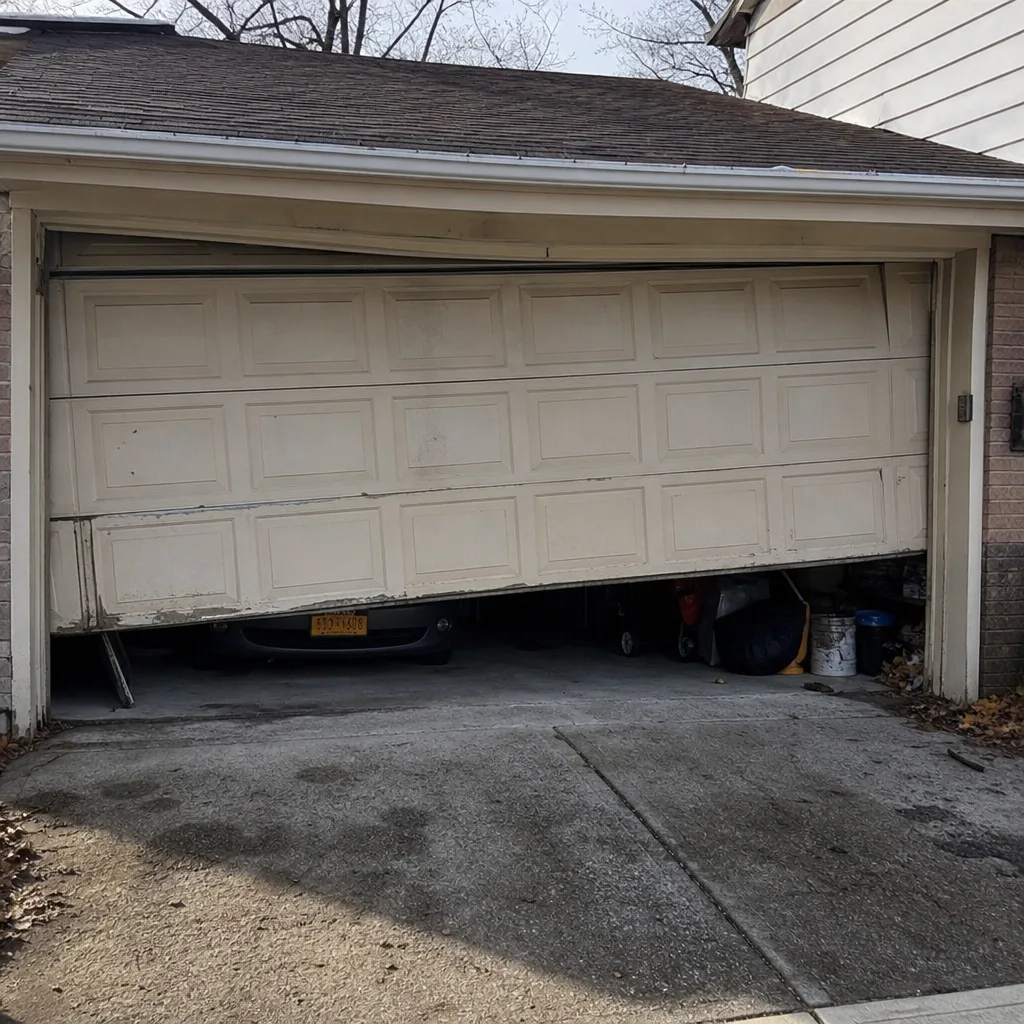 Before
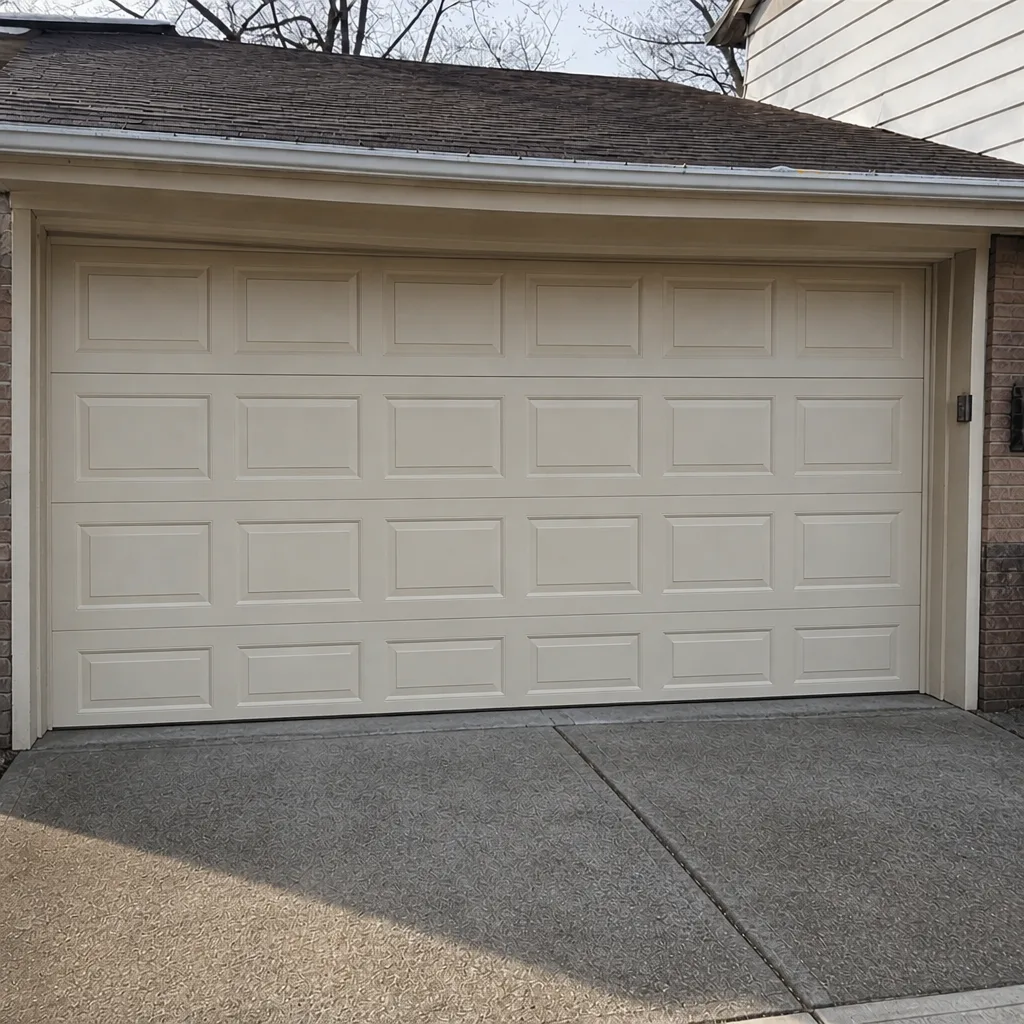 After
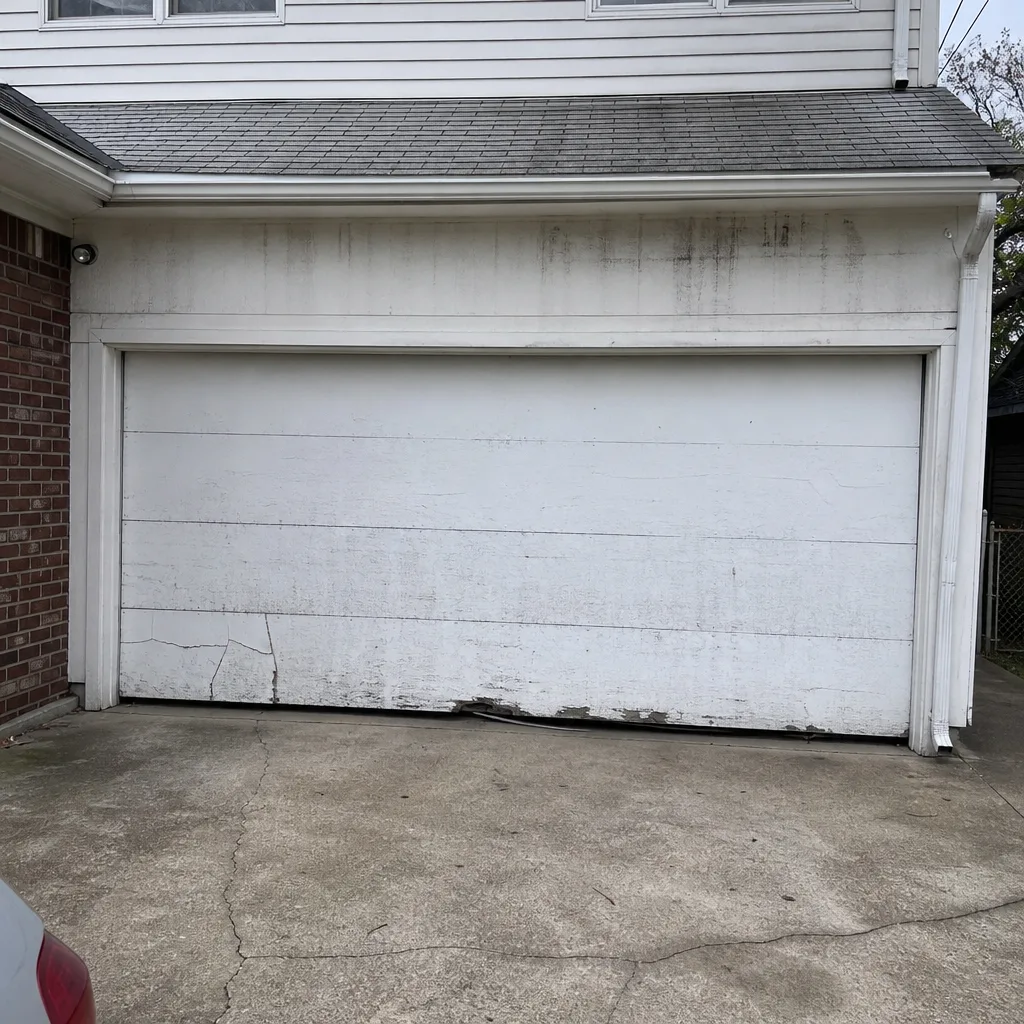 Before
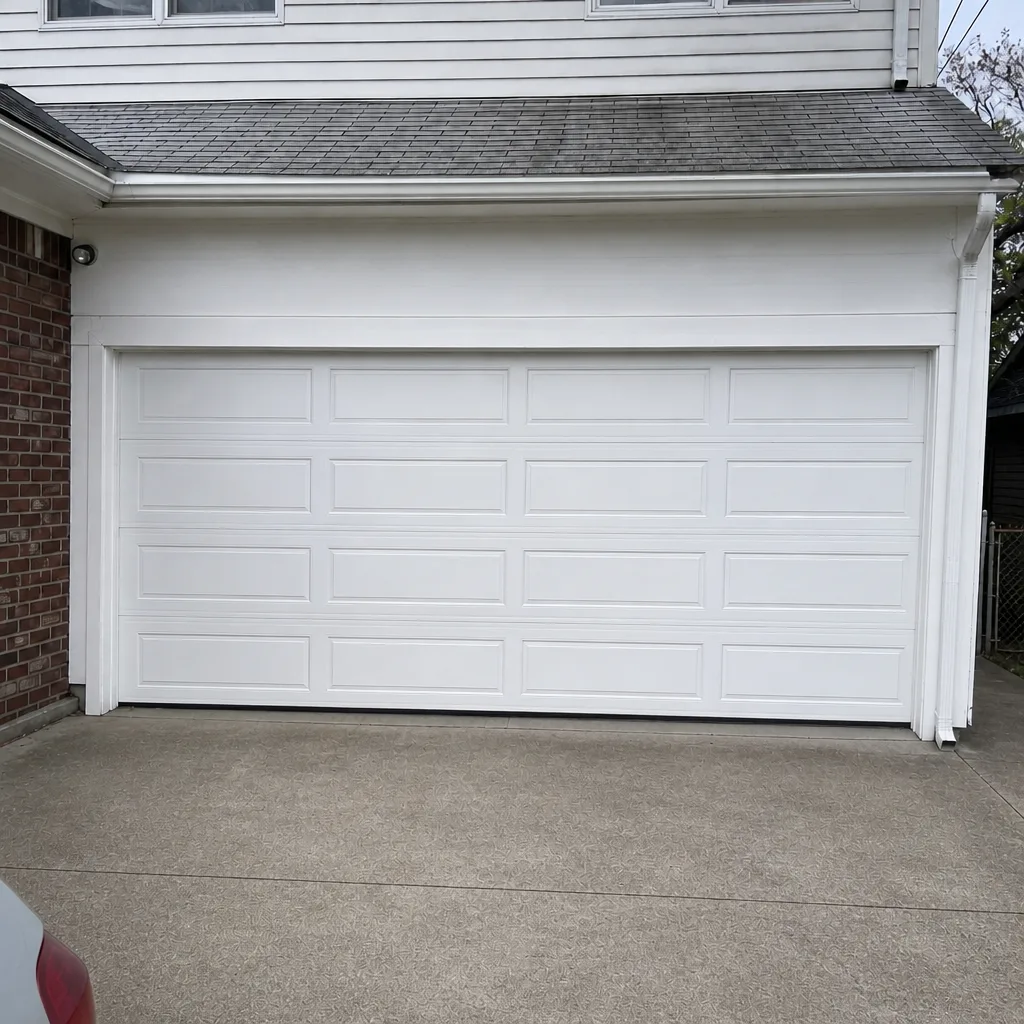 After
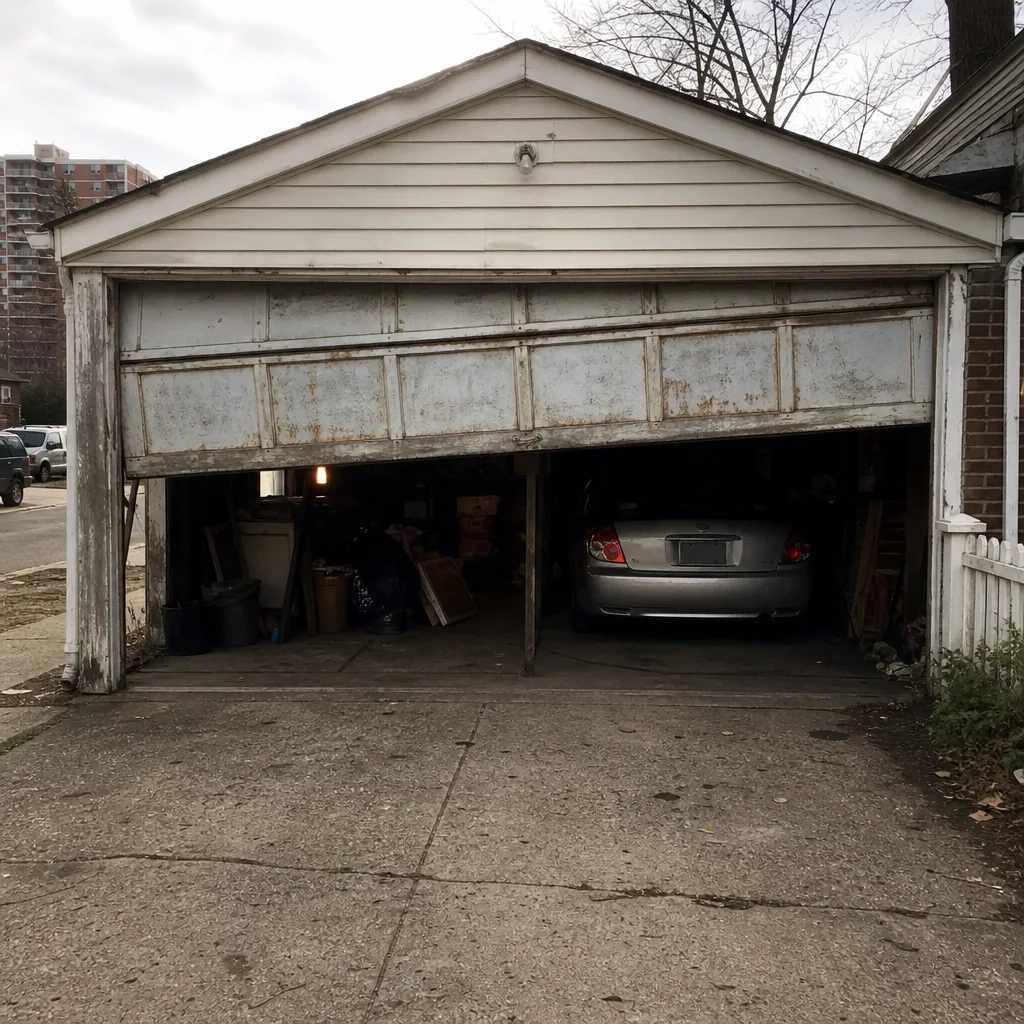 Before
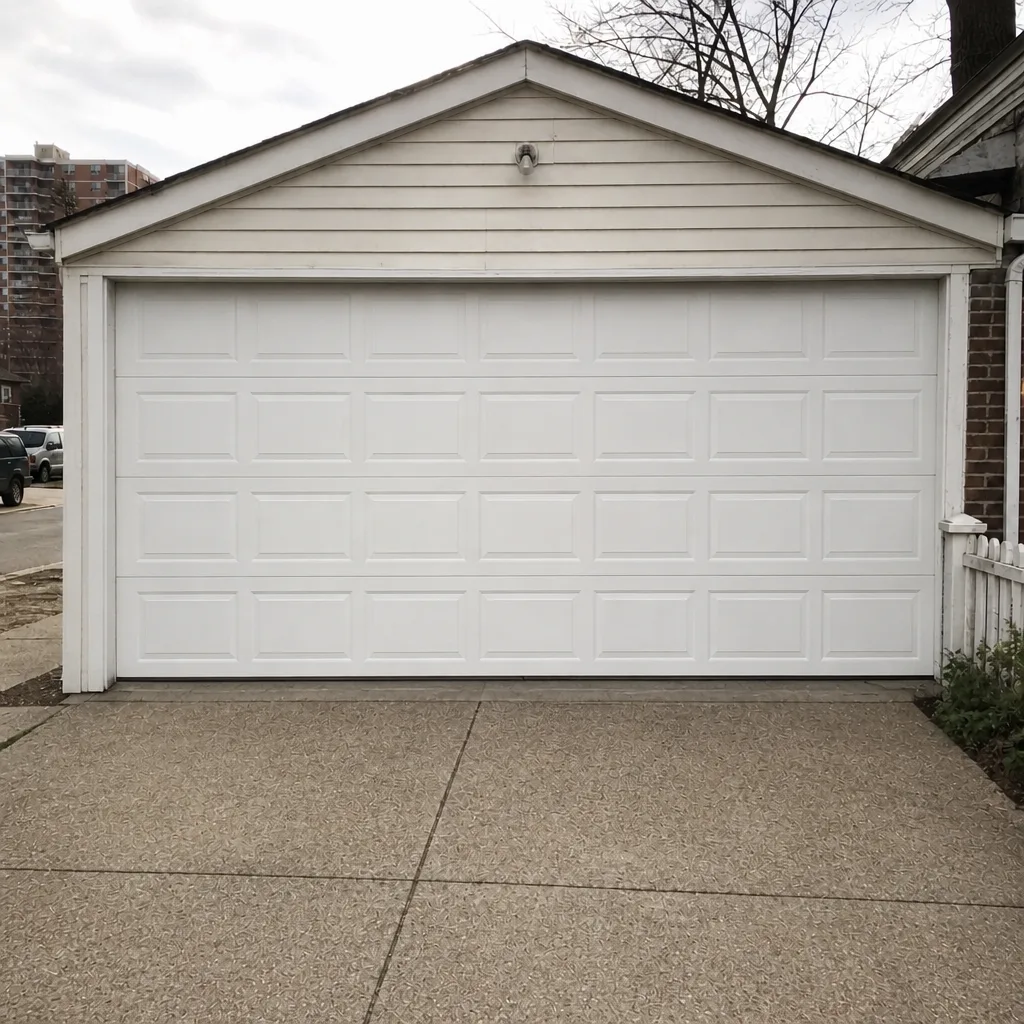 After
When to Call a Professional
Call a professional for any spring or cable failure, any door that won’t stay up on its own, any door that’s come off its track or is sitting crooked in the opening, and any opener that runs but doesn’t move the door. Those are the situations where the toolset and the training matter. On the lighter end, a stuck safety sensor, a dead remote battery, or a jammed trolley is worth a phone conversation before a service call, and we’ll tell you which one you’re looking at. Garage Door Repair Co-op City offers free estimates in Co-op City – call (844) 741-4548.
Frequently Asked Questions
Check the wall control for power and try the door by hand only after confirming the springs are intact. If the power is on and the opener hums but the door doesn’t move, the issue is usually the trolley, the release, or a stripped gear, and it’s a repair call. Call (844) 741-4548 for a free estimate.
Yes, if the door is mechanically sound – no broken spring, no slack cable, and the door sits level in the opening. Pull the release cord straight down once, lift the door by hand slowly, and reconnect by running the opener with the door fully up. If the door feels heavy or drops on its own, stop and call.
Spring repair is scheduled work rather than a same-day promise, because the technician measures door weight before ordering the correct spring. Call (844) 741-4548 and we’ll give you a straight timeline and a written estimate before any work starts.
There’s no single number, because the cost depends on whether it’s a spring, a cable, an opener, or a track repair, and on whether the door needs one part or a matched pair. We quote the price and agree it with you before any work starts, so the written estimate is the price. Call (844) 741-4548 for an exact quote – estimates are free.
Lower the door by hand if it’s balanced and light, then secure the bottom rail across the track. If the door is under unusual load or won’t come down, leave it open, keep people away from the path, and call (844) 741-4548. A door stuck open is a security issue as much as a mechanical one.
We service LiftMaster, Chamberlain, Genie, and Craftsman openers, along with the door hardware on Clopay, Amarr, Wayne Dalton, and Raynor doors. Knowing the brand before we arrive means we bring the right parts on the first visit. Call (844) 741-4548 with your model number and we’ll confirm.
If the door panels are dented beyond repair or the hardware is past saving, garage door installation covers a full replacement. That’s measured, ordered, and scheduled work, so expect a free measure and a written price rather than a same-day install. Call (844) 741-4548 to set it up.
The Bottom Line
A garage door emergency in Co-op City splits into two clean phases: don’t make it worse, then get the right help fast. The safe rules are simple. Broken spring or slack cable means hands off and a call. Power outage on a sound door means the manual release is fine, and you know now which cord to pull on your LiftMaster, Chamberlain, or Genie unit. A door that won’t close means check the sensors first, then secure the track. And whatever the failure, the brand and model details get the right parts on the first visit. When you need help, one call to (844) 741-4548 covers repair, springs, openers, and installation. Visit Garage Door Repair Co-op City for the full picture of what we handle.
Written by the team at Garage Door Repair Co-op City.