Last updated November 21, 2026
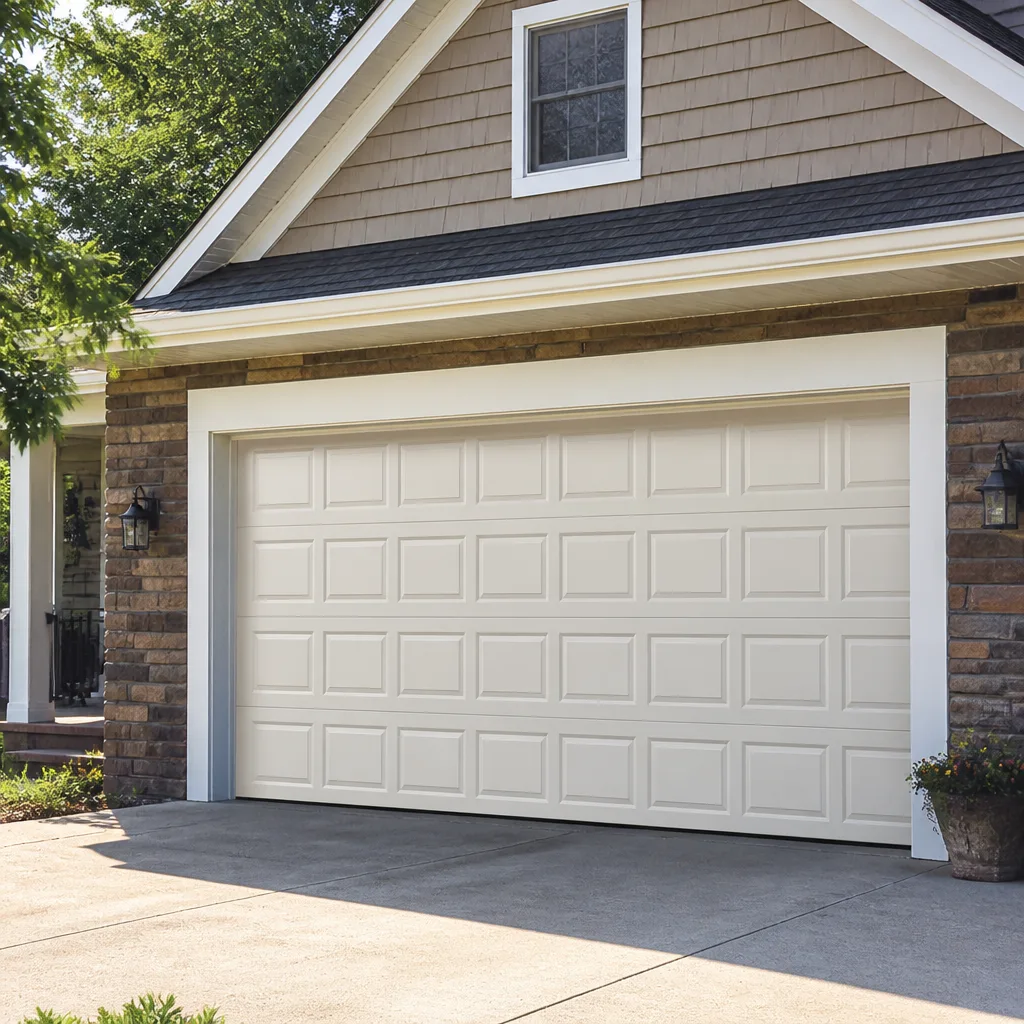 Raised-panel steel
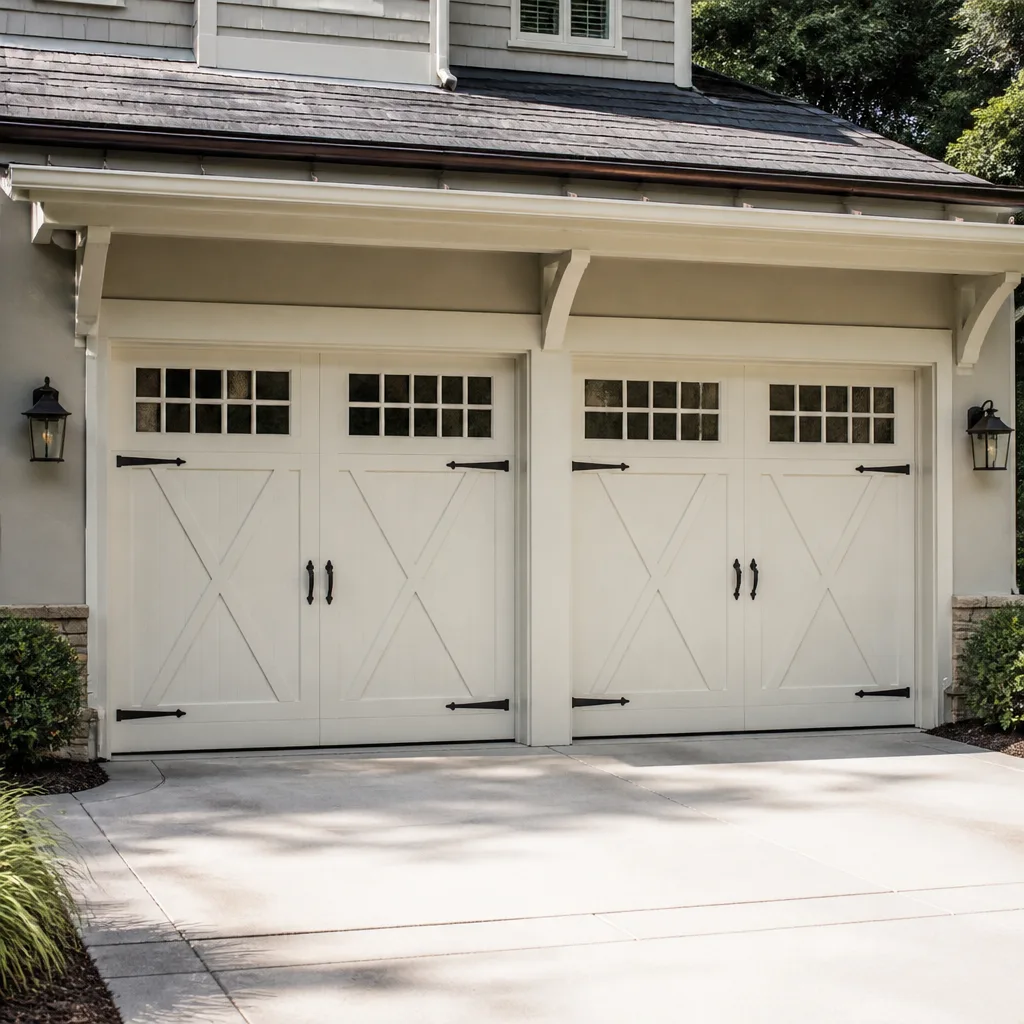 Carriage house
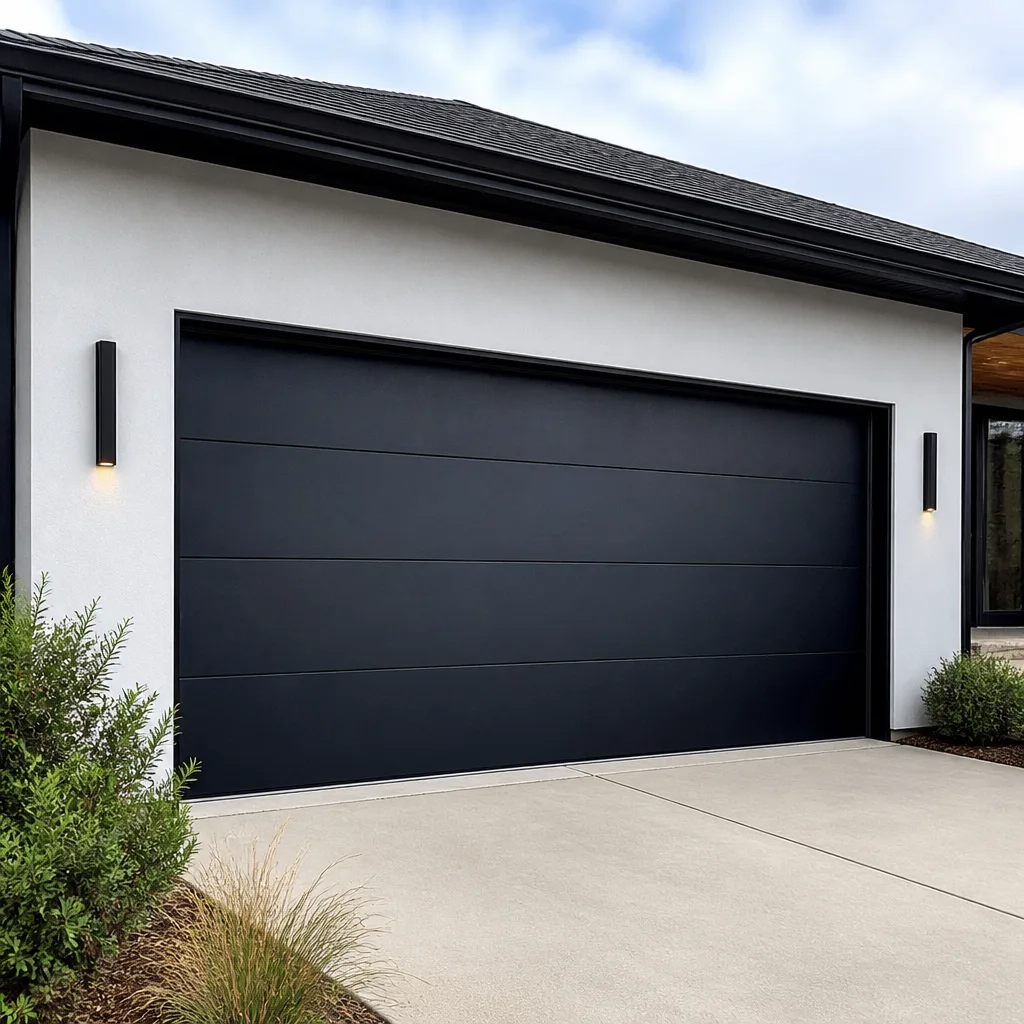 Modern flush
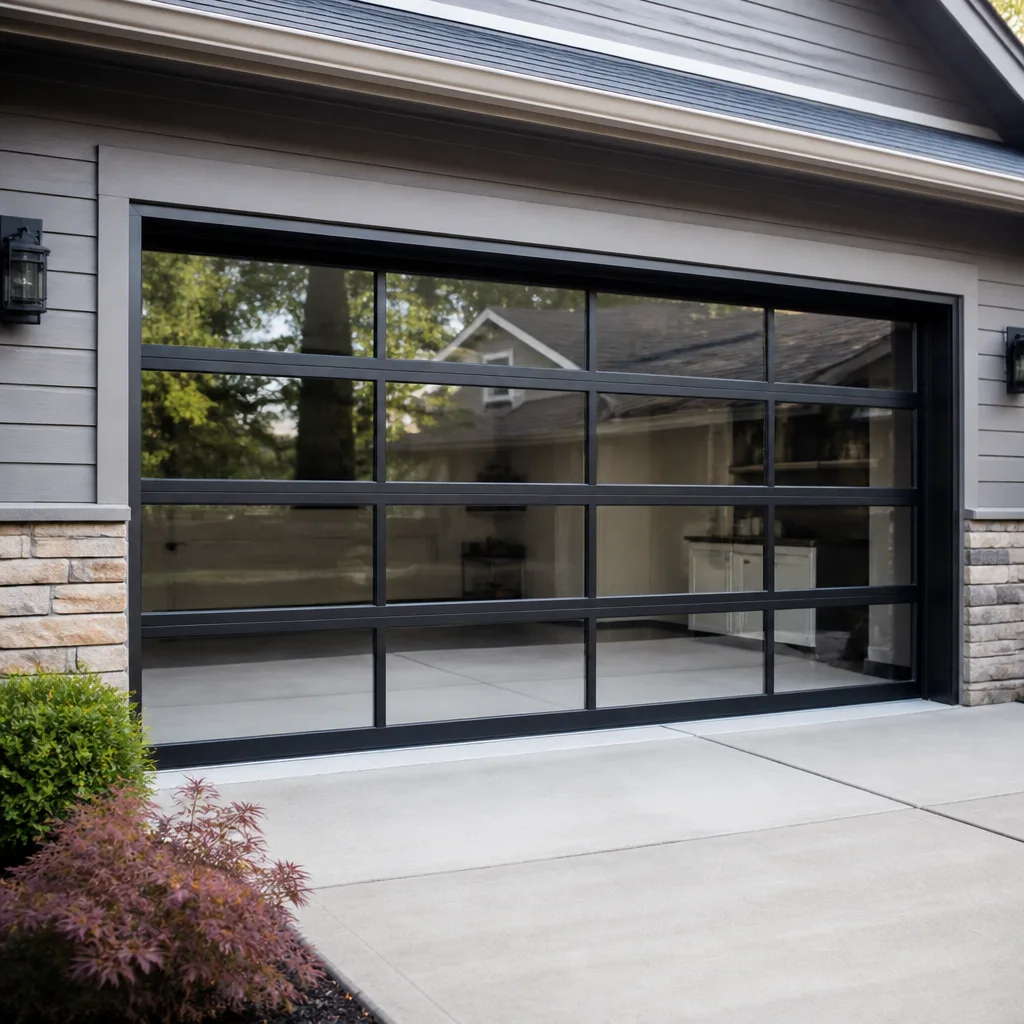 Full-view glass
 LiftMaster openers
 Chamberlain openers
Full 25-point door and opener safety check with every visit - springs, cables, rollers, tracks, and your LiftMaster or Chamberlain opener included
You get a price before we start. It does not change when the pro arrives.
Get your free estimateHow to Hire a Garage Door Contractor in Co-op City: A Step-by-Step Guide
Most homeowners think hiring a garage door contractor comes down to comparing quotes. In Co-op City, that’s actually the last step, not the first. A contractor who can’t document a current NYC license, or whose insurance doesn’t cover work inside a Bronx residential structure, is a risk no low bid can offset. The hardest part of hiring here isn’t finding someone to show up; it’s verifying they’re legally and financially accountable before they ever touch your door. This guide walks you through the vetting filter step by step: license verification, insurance, written scope, parts grading, and the questions that separate a real local pro from an out-of-area operator who happened to rank for your search.
Quick Answer
Hiring a garage door contractor in Co-op City means verifying three things before you schedule: an active NYC contractor license and registration through the Department of Buildings, insurance that protects your home and your building, and a written scope of work that names the parts and prices before any labor begins. Price should come after those checks, not before. A licensee working in New York City is not the same as one licensed in New Jersey, Westchester, or Nassau, and a quote from a contractor licensed elsewhere doesn’t carry the same coverage inside a Bronx building.
Styles & brands we work with
- Raised-panel steel
- Carriage house
- Modern flush
- Full-view glass
- LiftMaster openers
- Chamberlain openers
Table of Contents
- Why NYC Licensing Comes Before Price
- What Insurance Actually Protects You in a Bronx Building
- How to Verify a Contractor Step by Step
- Reading a Quote: Scope, Parts, and Grade
- Red Flags Specific to Urban Garage Door Bids
- Questions That Reveal Local Experience
- Common Mistakes to Avoid
- When to Call a Professional
- Frequently Asked Questions
Why NYC Licensing Comes Before Price
Search “garage door repair near me” from Co-op City and the results page mixes contractors across several states. That’s the first thing to understand. A garage door business licensed to work in New Jersey, Westchester, or Nassau County isn’t licensed to work in New York City, and the requirements in those places are not interchangeable with New York City’s. When you’re comparing two quotes for the same spring replacement, and one comes from a company licensed elsewhere, you’re not comparing equivalent work. You’re comparing regulated work to something with no local oversight behind it.
New York City contractor licensing runs through the Department of Buildings. The details change over time, so we tell homeowners to check with the DOB directly rather than rely on our description of the process. What matters is that a license is a filter: it confirms identity, business registration, and accountability to a city agency that can be reached if something goes wrong inside your building.
That distinction matters more in Co-op City than in most places. The housing stock here is dense and mostly attached, with shared walls, garages that sit under or beside living space, and buildings that run utilities through or near where a technician will be working. A contractor who isn’t accountable to a New York City agency has no real answer to a resident who needs recourse after a problem.
One more point: the same gate applies to our service. When you schedule with us, the local professional who performs your work is licensed and insured as New York State requires, and we’ll walk you through the verification. If any contractor you’re considering can’t answer the licensing question in plain language, that’s the sign to keep looking.
What Insurance Actually Protects You in a Bronx Building
The phrase “fully insured” gets said on almost every call. What it actually covers varies widely, and in a shared building the difference is significant. General liability protects your property and the common areas from damage the contractor causes. Workers’ compensation covers a worker who’s injured on your job. Both matter. Neither is optional in a building where a dropped door panel, a damaged track, or an injury in a shared garage could involve more than one party.
In a dense residential structure, insurance carries a different weight than it does in a detached suburban house. If a door slams down on a shared stairwell wall or a technician is hurt while moving hardware through a common entryway, the scope of exposure isn’t limited to your unit. That’s why the insurance question isn’t about trusting a stranger’s word. In New York, the state Workers’ Compensation Board maintains a public record you can check, and liability coverage is a certificate the contractor should be able to produce on request.
What to ask for:
- Whether the contractor carries general liability coverage and can provide a certificate.
- Whether Workers’ Compensation is active, and a way to verify it independently.
- Whether the coverage extends to commercial or multi-unit work, not only single-family.
Keep the language precise. A homeowner comparing quotes has every right to see documentation. A contractor who won’t produce it isn’t being modest; there’s usually a reason.
How to Verify a Contractor Step by Step
Verification takes maybe twenty minutes and prevents months of frustration. Here’s the sequence we suggest, in order.
- Confirm the business identity. Get the legal business name and address before the visit, not after. A contractor working under one name online and another on the invoice complicates every step that follows.
- Check the NYC Department of Buildings license record. Verify the business holds an active contractor license appropriate to the work. Ask the building department directly which license class applies to garage door installation and repair in the current cycle, since requirements shift.
- Check Workers’ Compensation coverage through the New York State Workers’ Compensation Board. An active record should appear under the business name.
- Request the liability insurance certificate. Read the dates and the coverage limits, not just the presence of a document.
- Ask who actually does the work. Some companies route the job to a subcontractor after booking. Confirm whether the technician performing the visit is an employee or a sub, and whether that changes who’s covered by insurance.
- Get the estimate in writing before scheduling the repair itself. Verbal pricing followed by a larger invoice on the day is one of the most common complaints.
- Confirm the brand coverage. Ask whether the contractor routinely services the door brand and opener brand you already own. A technician familiar with your equipment saves time and avoids wrong parts.
When you’ve completed these steps, the price comparison actually means something. Two quotes from equally licensed contractors are a fair comparison. One from a licensed NYC contractor and one from a company licensed in a neighboring state are not the same job. If you’re repairing a door, a garage door repair professional should be able to answer every one of these items without hesitation.
Reading a Quote: Scope, Parts, and Grade
Two contractors can quote the “same” repair and be describing very different things. A torsion spring replacement without a stated gauge, material, or expected cycle life is not a price. It’s a placeholder. This is where a lot of homeowners get surprised, because the invoice on the day suddenly names premium parts and a higher number that never appeared on the estimate.
A proper written quote names the components specifically. On spring work, that means which spring, and the count. A high-tension spring replacement is quoted per spring, and matched pairs usually get replaced together. If the quote doesn’t say how many springs the price covers, ask. On opener work, the quote should identify whether the job is a repair, a motor replacement, or a new unit, and name the model. On installation, it should identify the door material, insulation, size, and the opener, plus whether removal of the old door is included.
The grade of a component is not a footnote. A low-grade spring can carry the same descriptive label as a higher-grade one, but the two aren’t the same product. When you’re comparing quotes for a garage door opener repair, ask each contractor to describe the part they’ll use in the same terms, then compare. Anyone who can’t name the grade or the model isn’t giving you a real price. They’re giving you a range with a rug underneath it.
And the price you’re quoted is the price you pay. A good contractor will quote before any work begins and honor that quote. If the job needs more once the technician starts, the contractor should stop and come back to you with a revised written estimate, not proceed and surprise you at the end.
Red Flags Specific to Urban Garage Door Bids
The warning signs in Co-op City look different from a suburban list. Dense buildings, shared driveways, tight parking structures, and cooperative management add pressure points a general contractor from out of state may not anticipate. Watch for these:
- No written scope, only a verbal price. If an estimate is offered over the phone without a visit or a written follow-up, you’re discussing a guess, not a quote.
- Parts described vaguely. “Spring,” “opener,” or “bracket” without a grade or model is not a specification.
- Day-of upsells. If the technician arrives and suddenly the price has jumped for parts that weren’t on the original quote, stop and ask for the estimate in writing before any labor starts.
- Out-of-area licensing. A license issued in a neighboring state doesn’t cover work in New York City. Ask for the NYC license record.
- No answer on who performs the work. A company that won’t say whether the technician is an employee or a subcontractor can’t tell you who’s insured for the job.
- Asking for full payment before the work begins. A reasonable deposit or payment on completion is normal. Prepayment in full before the door is opened is not.
- Ignoring building access and parking realities. A contractor who hasn’t asked how to bring equipment to your garage or how the building handles access hasn’t worked here before.
Any one of these by itself may be a coincidence. Two or three together should send you to the next name on your list.
Questions That Reveal Local Experience
Local experience is hard to fake. You’ll know within a few minutes whether the contractor has worked in Co-op City’s building types before or is just driving here for the first time. The right questions are less about credentials and more about practicalities.
- “How do you handle access and parking at my building?” A contractor who’s worked here will talk about it in detail. Someone who hasn’t will pause.
- “What door and opener brands do you see most in this area?” Familiarity with common household brands is a real diagnostic advantage. LiftMaster, Chamberlain, Genie, and Clopay come up often; a contractor who knows them well will answer without counting on their fingers.
- “Have you replaced a spring in a garage that attaches to a shared wall?” The skill is different from working on a stand-alone door.
- “Do you service commercial-grade openers?” If your building has shared parking with a larger door, the answer should be clear.
- “How do you handle the old door on a replacement?” Haul-away matters if you don’t have space to store the old panels.
If you’re planning a full door replacement, the visit itself is a measure, not a repair, so it will be scheduled rather than promised for the same hour. A garage door installation conversation should include a written measurement and a firm price before any materials are ordered.
See the difference
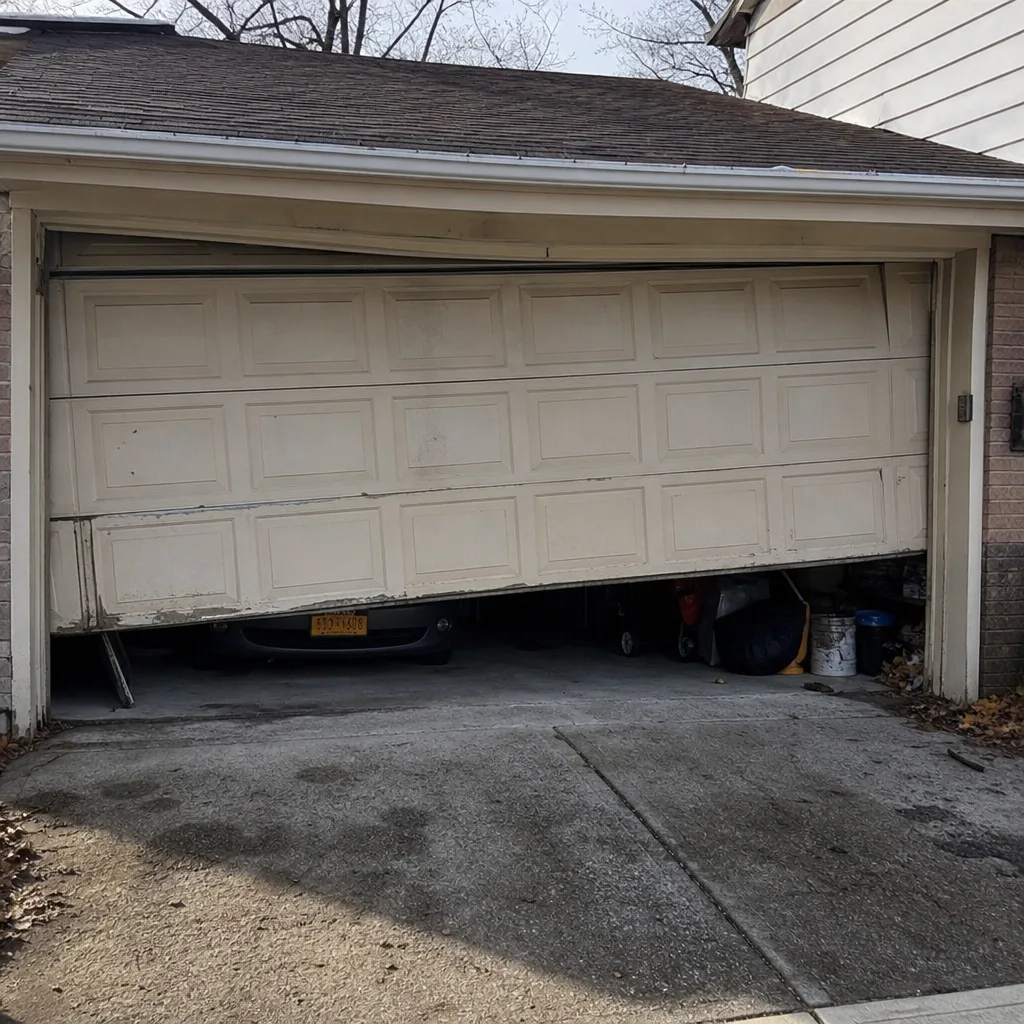 Before
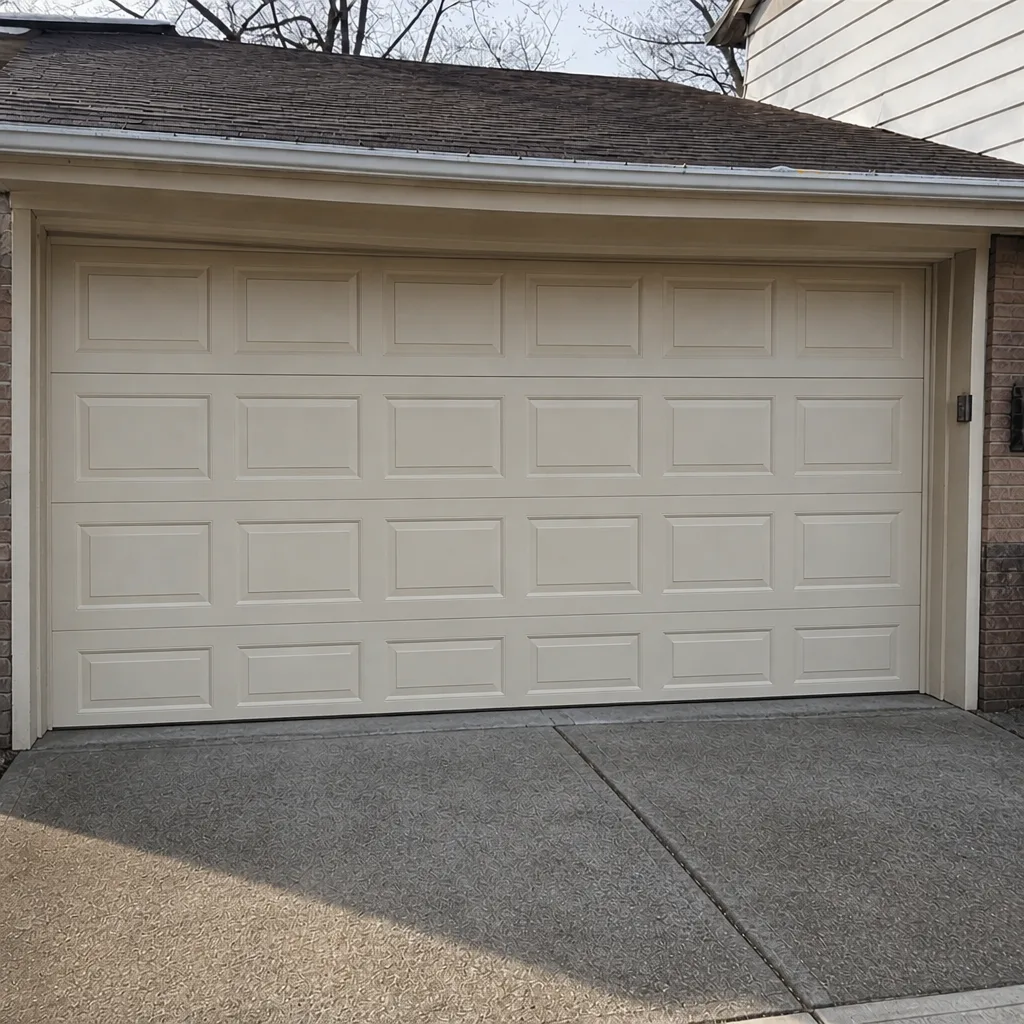 After
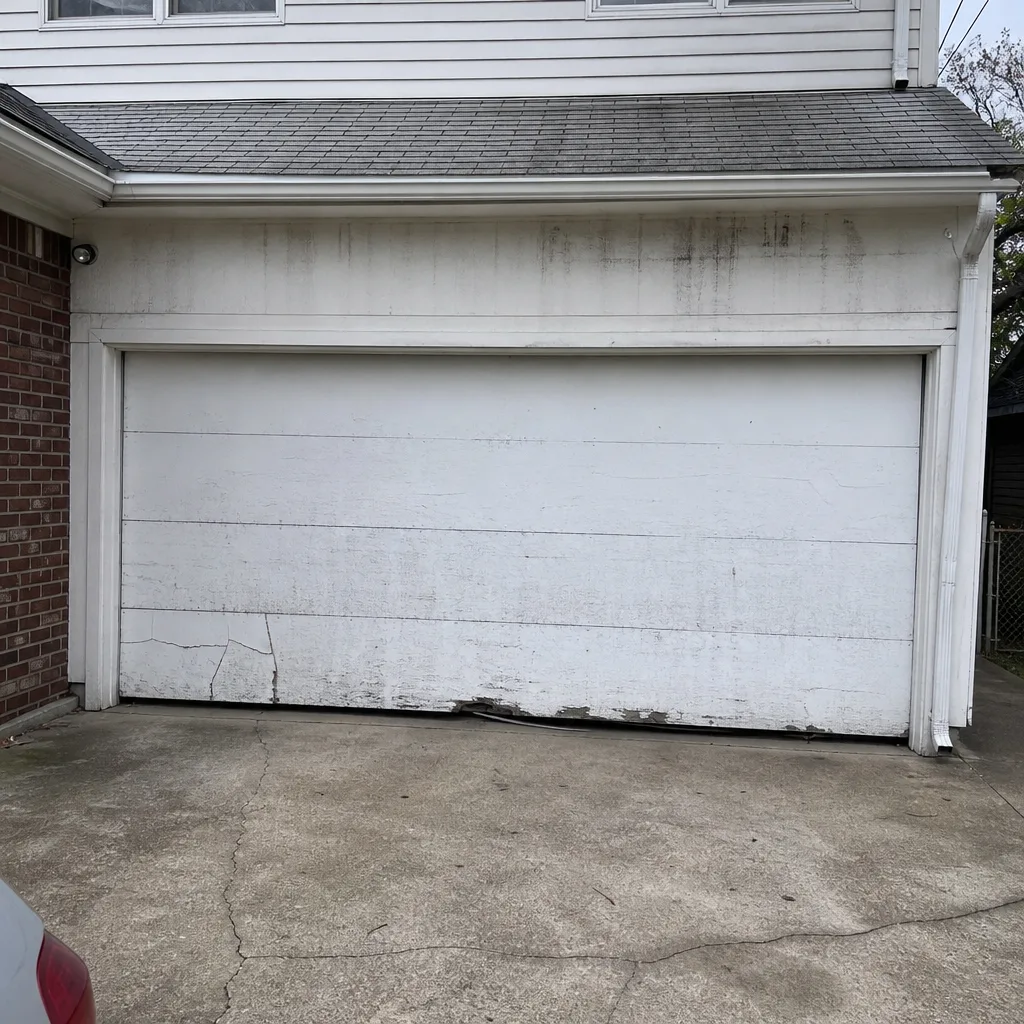 Before
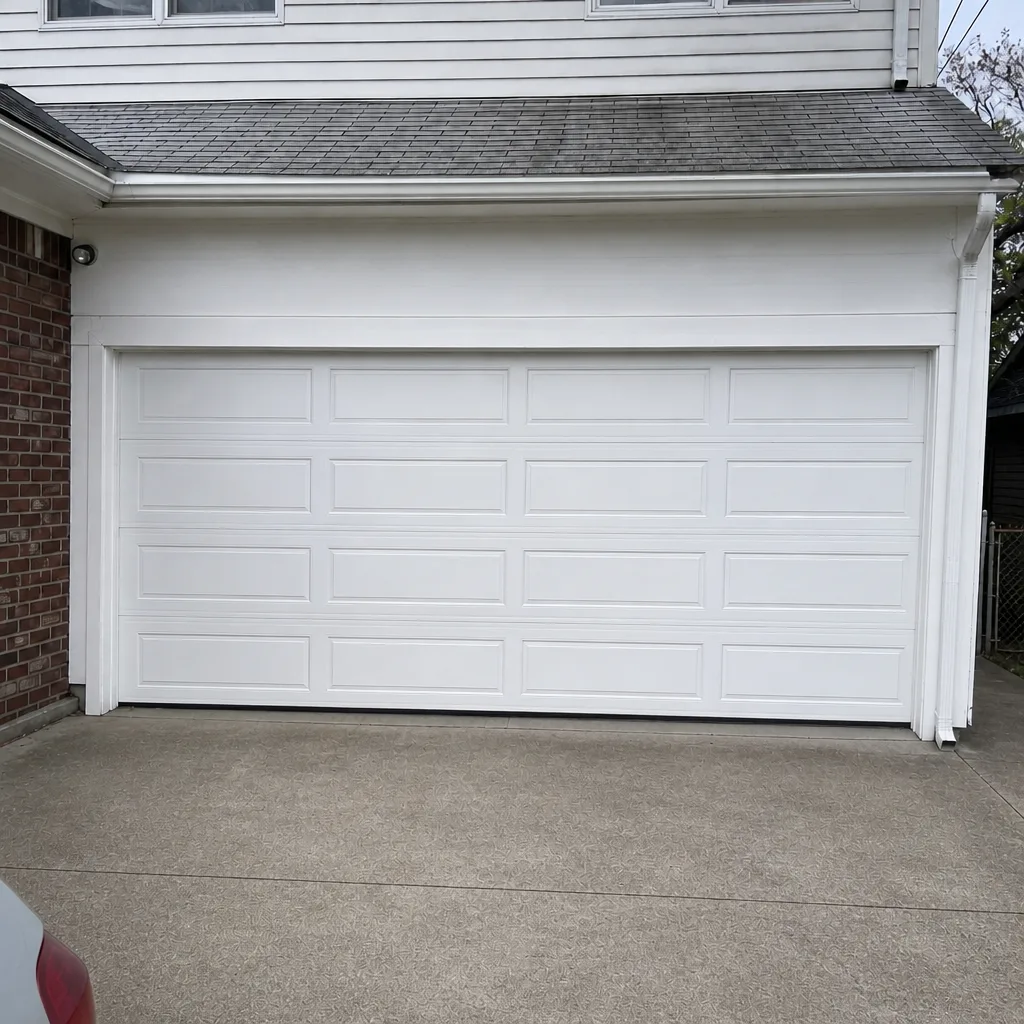 After
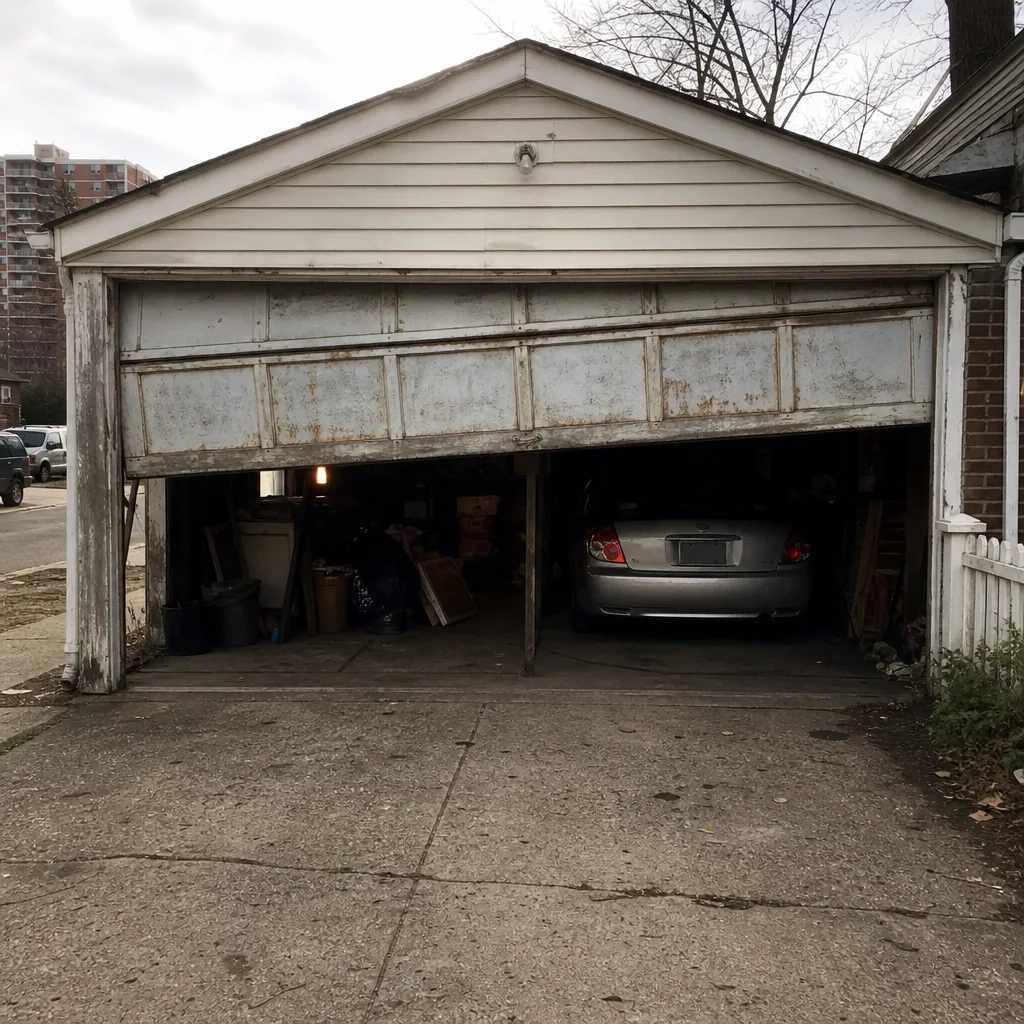 Before
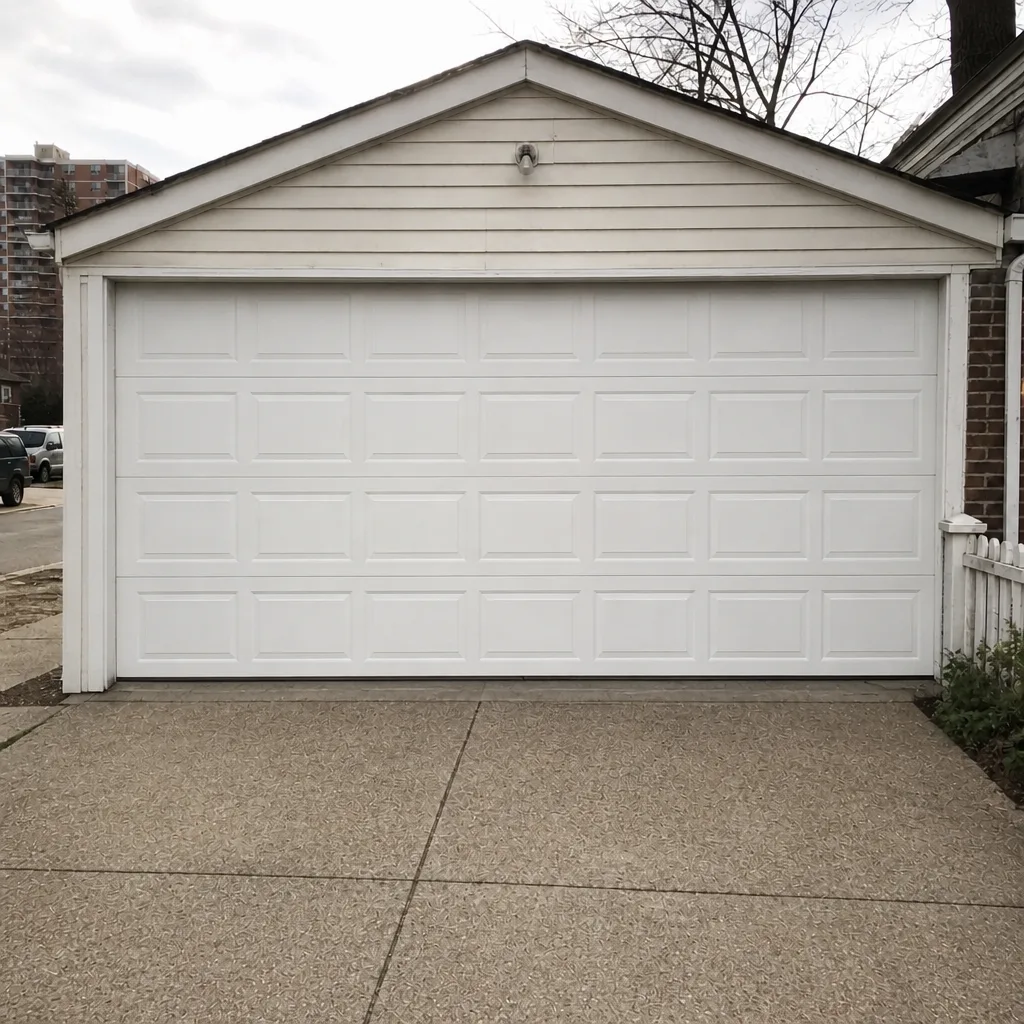 After
Emergency and After-Hours Vetting
When a spring snaps or a door comes off its track, the priority is stopping damage and restoring security. That’s not the moment to interview a contractor for an hour. But you can still run the basic checks quickly. Ask three questions before the visit: is the business NYC licensed, do they provide the price in writing before starting, and do they have a record of spring work in a residential building like yours. The answers should come fast. If they don’t, keep calling.
The reason speed matters here is that a garage door stuck open, or stuck closed with a security gap, is a real problem. Springs, in particular, are under hundreds of pounds of tension, and a door with a broken spring can be sitting in a dangerous position. Don’t try to force it open, and don’t try to remove hardware on your own. That’s a job for someone with the right tools and training. For emergencies, a call to a trained technician is the safe move. If you need a same-day visit, garage door repair Co-op City is how you reach us, and a pro will walk you through what to do while you wait.
Emergency work still gets a price before the technician starts. Urgency is never a reason to skip a written estimate or to accept a vague number from a company you haven’t verified.
Common Mistakes to Avoid
- Comparing prices before comparing licenses. Two quotes from two different regulatory environments aren’t comparable. Run the license check first on each contractor.
- Assuming “licensed and insured” means what it sounds like. Ask for the state and the coverage record. New York contractor licensing is issued by the Department of Buildings, and Workers’ Compensation is verifiable through the state’s board. Both checks are public.
- Accepting a verbal quote for a spring repair. Spring pricing depends on spring count, grade, and pairing. Without a written quote naming those, you can’t compare the offers and you can’t hold a contractor to a number.
- Not confirming who performs the work. If the business subcontracts the job, both insurance and accountability need to cover that person. Get it in writing.
- Letting the day-of visit become the negotiation. The written estimate is the price. If the technician proposes new work or higher numbers on the spot, ask for a revised written estimate before any additional labor starts.
- Choosing a bid without a scope for the old door. If a replacement is happening, ask who removes, hauls, and disposes of the old door and hardware. Leaving that out of the quote is a common way a price quietly grows.
- Underestimating Co-op City building access as a cost line. Dense properties, tight parking structures, and shared driveways can slow a job down. A contractor who’s honest about access in the quote is one who’s worked here before.
When to Call a Professional
Some repairs are worth a call regardless of how handy you are. A snapped spring, a door that won’t rise or fall, a cable that’s come off the drum, a track that’s bent after impact, and an opener that’s dead or running but not moving the door all belong in the professional category. So does any garage door with a visible sag, a gap along one side, or a door that reverses on its own before reaching the floor. Those are safety signals, not cosmetic ones. High-tension springs and the cables they control are among the most dangerous parts of a home, and handling them without the right tools and training is how people get seriously hurt. Don’t try it. If it’s an opener issue, a technician familiar with the brand can usually diagnose the cause quickly. For a professional, same-day help, we’re reachable at (844) 741-4548 and can arrange a visit. Garage Door Repair Co-op City offers free estimates in Co-op City. Call (844) 741-4548 and we’ll walk you through the options.
Frequently Asked Questions
You check the business against the NYC Department of Buildings contractor licensing record and confirm Workers’ Compensation through the New York State Workers’ Compensation Board. Ask for the legal business name, then confirm both records under that name. A license issued in New Jersey, Westchester, or Nassau is not the same as a NYC license. Call (844) 741-4548 and we’ll walk you through how to verify any contractor, including us.
Not automatically, but the regulatory overhead is different because NYC licensing and insurance requirements apply to the work. That means a licensed NYC contractor will typically quote from a structure that includes those costs. What protects you isn’t the lowest number. It’s a written quote from a verified, licensed contractor. A few extra dollars on a licensed, insured job usually beats a cheap quote from an unlicensed one. Call (844) 741-4548 for a free, no-pressure estimate.
A written quote should name the specific parts, the model or grade of each, the labor being performed, and the total price before any work starts. For a spring repair, the quote should state the number of springs, not just “spring replacement.” For an installation, it should name the door, size, opener, and whether removal of the old door is included. If a quote doesn’t name parts and price in writing, it’s not a quote yet. Call (844) 741-4548 for a written estimate.
Yes, for the eight brands we work on routinely. We’re qualified to service LiftMaster, Chamberlain, Genie, Clopay, Amarr, Wayne Dalton, Craftsman, and Raynor products, which covers the door hardware and the opener side of the system. Familiarity with your equipment means correct diagnostics on the first visit and the right parts without a second trip. Call (844) 741-4548 to confirm your model.
The written estimate is the price. If a technician identifies additional issues that need work, they should stop and give you a revised written estimate before any extra labor begins. The exception is a legitimate discovery on arrival (unseen damage, a different failure than anticipated). Any change should come as a new quote, not a surprise invoice at the end. Call (844) 741-4548 with any questions about a quote you’ve received.
Yes, for urgent failures like a snapped spring, a door off its tracks, or an opener that’s dead, we can typically arrange same-day service. Emergency work is a safety priority because a struck door is often stuck in a dangerous position. Don’t force it, don’t try to remove hardware, and call. We’ll talk you through the immediate safety steps and get a technician to you as quickly as possible. Call (844) 741-4548.
The Bottom Line
Hiring a garage door contractor in Co-op City comes down to three checks before you compare prices: an active NYC license, verifiable insurance and Workers’ Compensation, and a written scope that names parts and price. Once those are in place, you’re comparing real quotes against real quotes. If the contractor can’t answer what door brands they work with, how they’ll access your building, and what happens if the price changes, you have your answer. The right contractor is the one who treats the estimate as a contract, not an opening offer. Our technicians have up to 10 years of experience and can work with your insurer on covered repairs. If you’d like a written estimate in Co-op City, call (844) 741-4548 for a free estimate.
Written by the team at Garage Door Repair Co-op City.