Last updated November 21, 2026
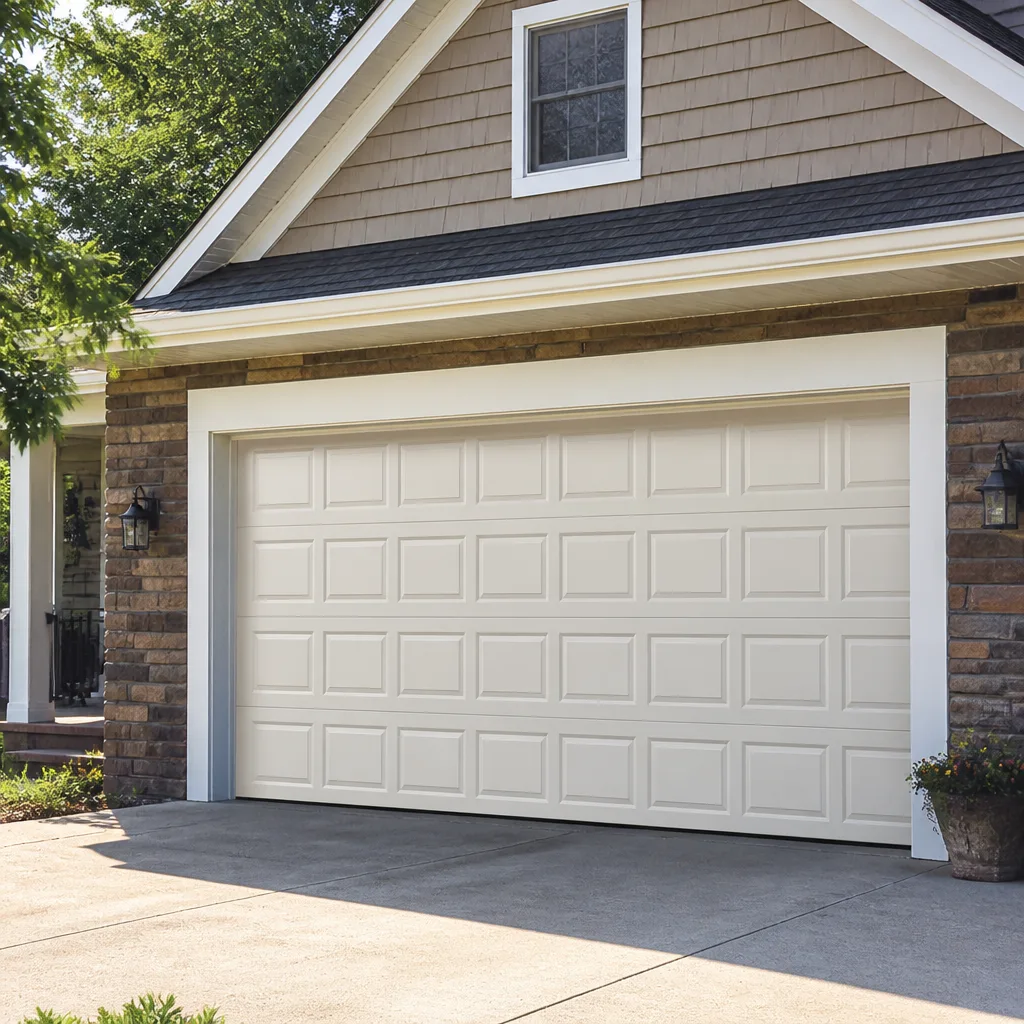 Raised-panel steel
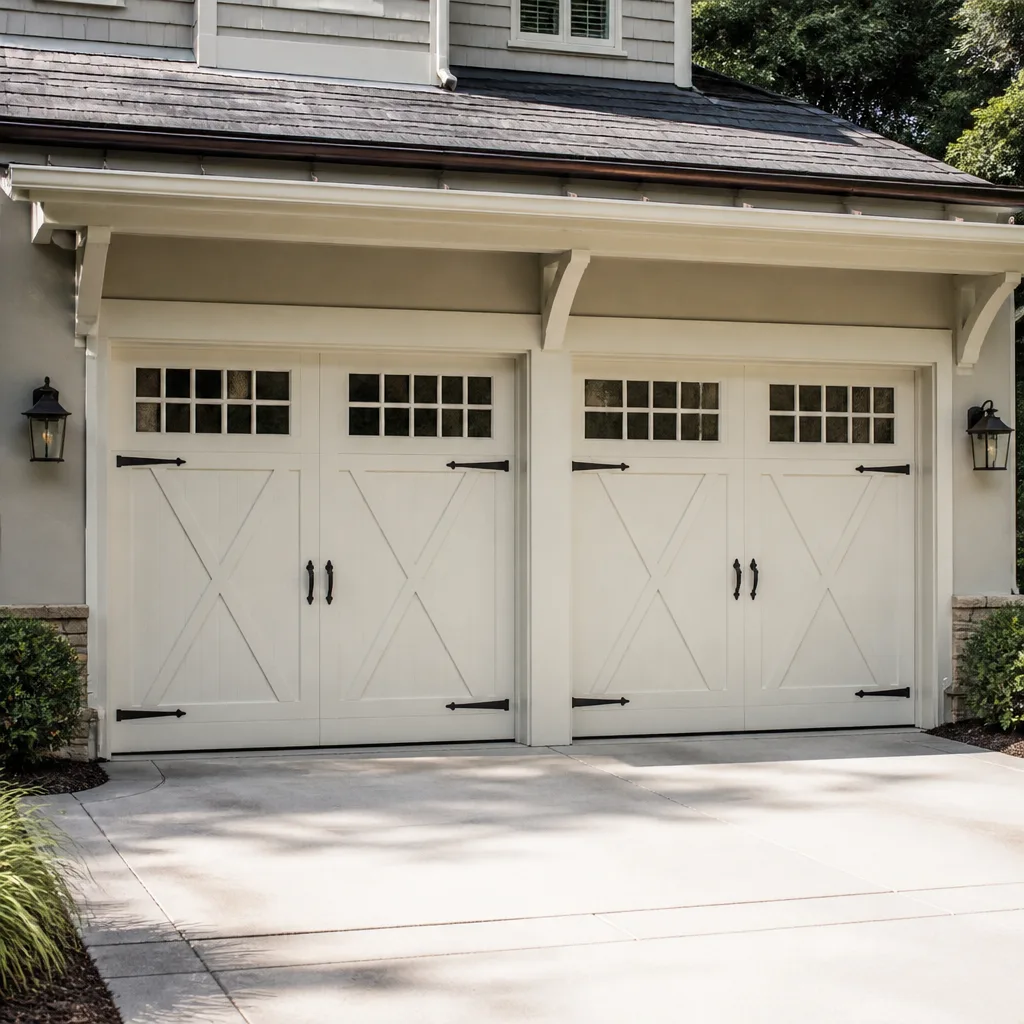 Carriage house
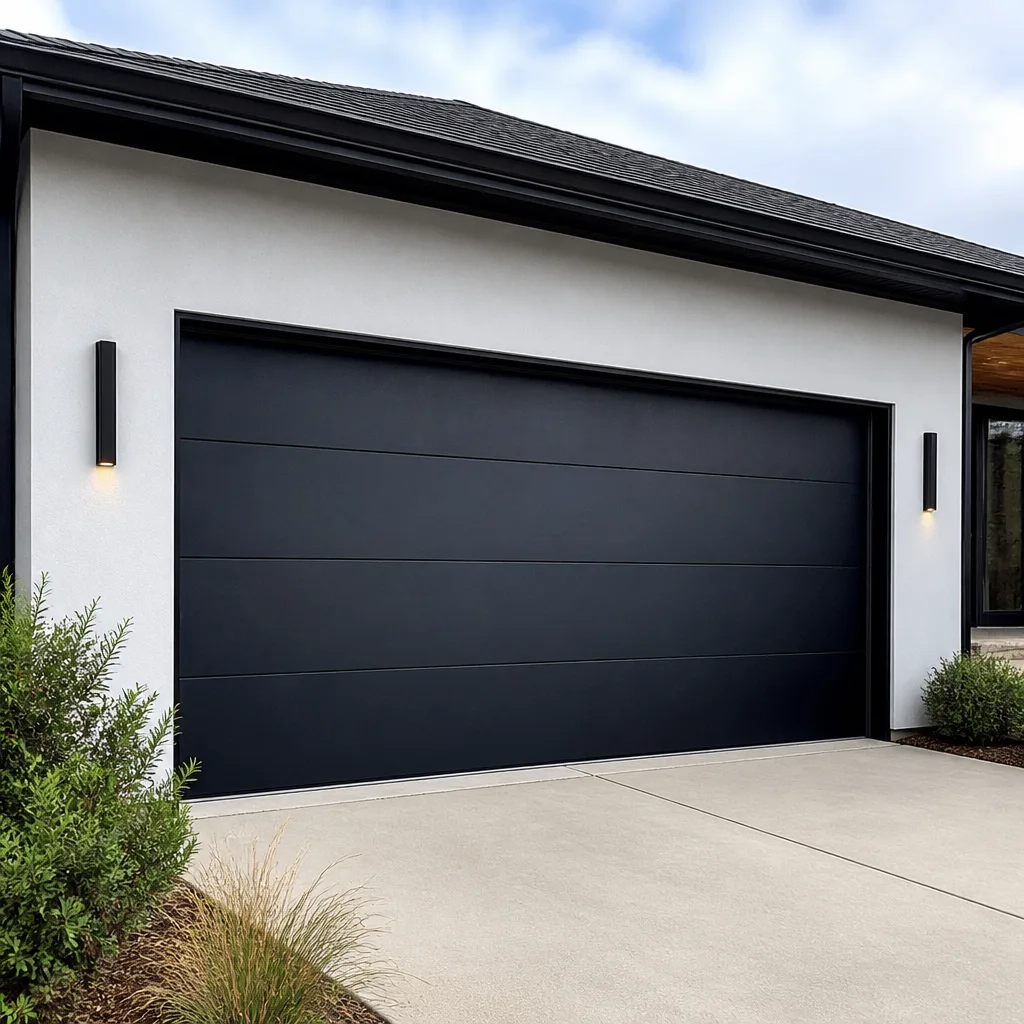 Modern flush
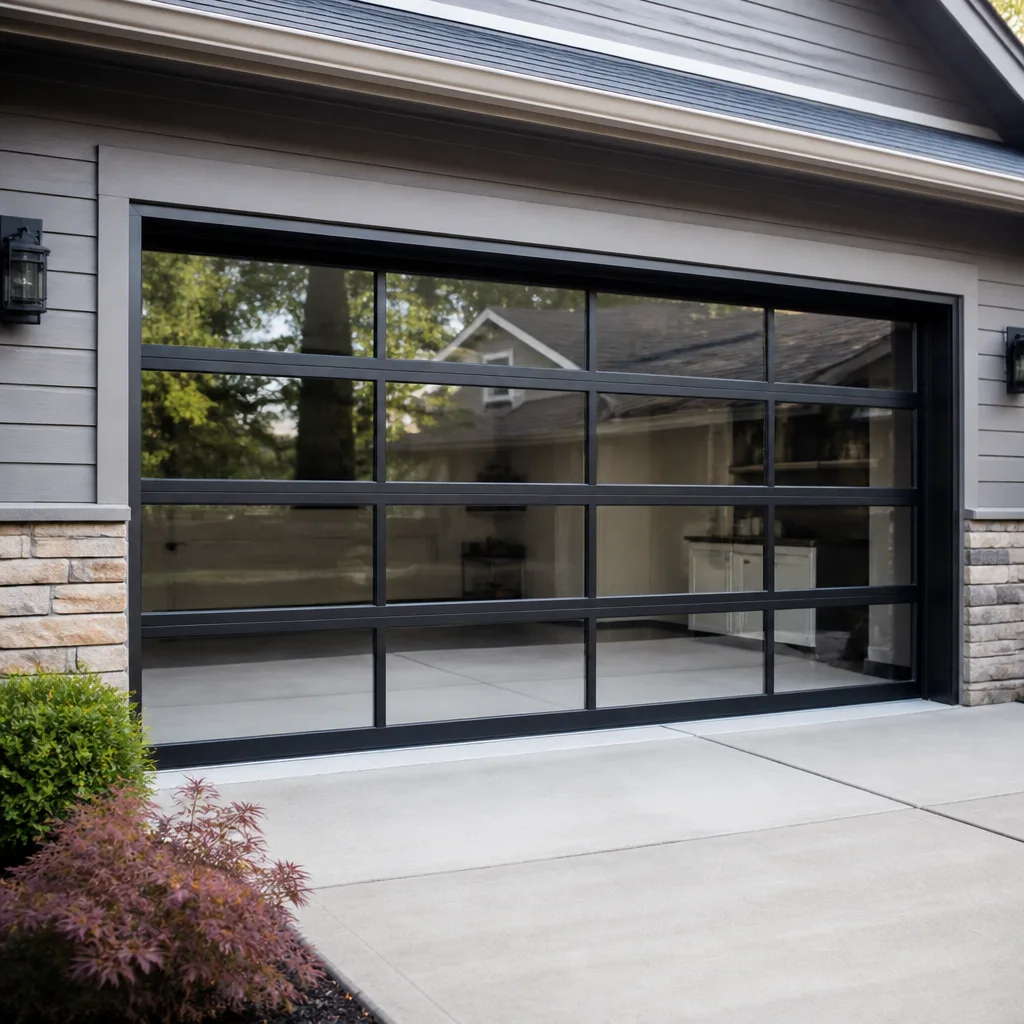 Full-view glass
 LiftMaster openers
 Chamberlain openers
Full 25-point door and opener safety check with every visit - springs, cables, rollers, tracks, and your LiftMaster or Chamberlain opener included
You get a price before we start. It does not change when the pro arrives.
Get your free estimateThe Complete Guide to Garage Doors in Co-op City
Most garage door guides are written for a detached suburban ranch house with a wide driveway and a clean, open ceiling. Co-op City isn’t that. It’s roughly 15,000 residential units stacked into towers and townhomes, and most of the garages here are attached or semi-attached, tucked under or beside shared walls, with ceilings and bays that weren’t designed around the standard sectional door template. That single fact changes almost every decision you’ll make about your door: how the springs are configured, how much headroom you have, how much noise travels into the next unit, and which door brands and parts actually fit.
This guide maps the real choices a Co-op City homeowner faces, from a snapped spring to a full replacement. Read the section that matches your situation and skip the rest.
Quick Answer
Garage doors in Co-op City need sizing and hardware chosen for tight, attached bays rather than open suburban garages. Sectional doors with low-headroom torsion springs and quiet hardware suit most Co-op City garages, and the brand you already own (LiftMaster, Chamberlain, Craftsman, Raynor, and others) determines which parts are correct. If a spring has snapped or the door is stuck, stop and call (844) 741-4548; springs handle professional-only repairs because they’re under heavy tension.
Styles & brands we work with
- Raised-panel steel
- Carriage house
- Modern flush
- Full-view glass
- LiftMaster openers
- Chamberlain openers
Table of Contents
- Why Co-op City Garages Are Built Differently
- Headroom, Clearance, and Spring Selection
- Sectional vs. Roll-Up Doors in Tight Bays
- Noise Transmission in Shared-Wall Garages
- Repair, Tune-Up, Opener Upgrade, or Full Replacement
- How to Identify Your Door Brand Before Calling
- Brand Compatibility and Part Availability
- Common Mistakes to Avoid
- When to Call a Professional
- Frequently Asked Questions
Why Co-op City Garages Are Built Differently
Co-op City is dense. Doors here sit in clusters, many of them under or beside occupied units, and that changes what a garage door has to do. A door in a detached suburban garage only has to keep weather out. A door in a Co-op City attached bay also has to keep its noise inside, its track clear of structural obstructions, and its footprint small enough for a narrower bay.
Here’s what that means for you in practice:
- Ceilings are often lower. Many attached bays don’t leave enough room for standard high-lift torsion hardware, so the door has to be configured for low headroom.
- Bays are narrower. A door that looked fine in a big-box showroom may not fit the opening in a townhome or semi-attached unit without custom panel sizing.
- Walls are shared. Rattle from a loose track, a worn roller, or a struggling opener travels into the adjacent unit in ways it never would in a standalone building.
- Access is limited. Driveways are shorter and shared; a door that extends too far into the driveway when open is a real problem, not a cosmetic one.
If you’ve been quoting advice from a suburban blog and it doesn’t fit what you’re looking at in your Co-op City garage, that’s the reason. The building shape comes first, and the door has to work inside it.
Headroom, Clearance, and Spring Selection
Headroom is the distance from the top of your door opening to the ceiling directly above it. In a standard suburban garage that number is often generous. In a Co-op City attached bay it’s often tight, and that’s the single biggest factor in how your door is sprung and tracked.
Here’s the general process we walk through on a measurement:
- Measure headroom. The distance from the top of the opening to the lowest obstruction: ceiling, ductwork, a beam, or a fire-stop soffit.
- Check backroom. The horizontal distance the door needs to travel back into the garage when open. Short backroom forces a low-profile track configuration.
- Check side room. How much space exists either side of the opening for torsion drums or extension spring stacks.
- Pick the spring type. Low headroom and low backroom usually call for low-headroom torsion or specific extension spring configurations; generous headroom allows more flexibility.
Two spring types do the lifting. Torsion springs mount on a shaft above the door and twist to counterbalance it. Extension springs run along the tracks on either side and stretch. Both store serious energy. When we talk about a spring repair price, that price is for one spring. If your door uses a matched pair (most do), both are normally replaced together and the pair roughly doubles that price. Ask for the pair in the written estimate so there are no surprises.
Low-headroom torsion hardware is one of the reasons a generic “average price” for a spring is useless in Co-op City. The set-up here is often different enough that we measure before quoting.
Sectional vs. Roll-Up Doors in Tight Bays
Two door families dominate garages here, and each works better in different Co-op City bays.
Sectional doors
Sectional doors break into horizontal panels that travel on curved tracks and lay flat against the ceiling. They’re the default in most residential garages, look residential, and give you the most insulation and weather-seal options. In a Co-op City townhome bay, the sectional is usually the right call if the headroom and backroom will support the curve of the track. If they won’t, you either drop to a low-headroom conversion or move to a roll-up.
Roll-up doors
Roll-up doors coil into a tight bundle above the opening instead of pushing back into the garage. That makes them useful where backroom is very limited or where the door can’t intrude into the bay at all. The trade-off is less insulation, a more utilitarian look, and a smaller choice of styles. If your unit’s HOA or building rules are strict about the exterior look from the street, verify what’s allowed before you decide.
For a Co-op City garage, the typical decision looks like this: sectional for most townhomes and semi-attached units with at least low-headroom clearance, roll-up for tight basement-style bays or where nothing can project back into the bay. A proper measurement decides it, and that’s what the free estimate covers when we look at a garage door installation for your unit.
Noise Transmission in Shared-Wall Garages
A door that rattles in a farmhouse bothers one family. A door that rattles in a Co-op City townhome shared wall bothers the neighbors on the other side. Quiet hardware isn’t a luxury here; it’s a courtesy and often a building requirement.
Where the noise comes from, roughly in order of impact:
- Metal rollers. Standard steel rollers transmit vibration straight into the track, and the track transmits it into the wall. Nylon rollers cut that significantly and are the first upgrade to try.
- Loose track. A track that’s working loose from the jamb amplifies every movement of the door. Re-anchoring it is a small job that pays for itself in quiet.
- Worn hinges. Hinges wear at the knuckles and start knocking on every section cycle.
- Opener chain or belt. Chain-drive openers are noisy. Belt-drive openers run noticeably quieter, which matters in a shared-wall bay.
- Door panel material. A heavier, insulated panel with a steel back flexes less than a thin single-skin door and produces less drumming in a tight bay.
If your neighbor can hear your door from inside their unit, start with the rollers and the opener belt. Those two changes alone solve most of the noise complaints we hear about in Co-op City.
Repair, Tune-Up, Opener Upgrade, or Full Replacement
Most people call when something is broken. That’s fine, but the right level of service depends on what’s actually wrong. Here’s how we sort the four levels:
Repair
Something is broken right now: a snapped spring, a door off its tracks, a cable that’s come loose, a panel that’s taken a hit. Repair fixes the specific failure so the door functions safely again. This is the fastest path and doesn’t require a replacement decision.
Tune-up
Nothing is broken but the door is noisy, slow, or starting to struggle. A tune-up handles lubrication, roller and hinge inspection, track alignment, balance, and opener force and travel adjustment. In a Co-op City bay, this is the level that catches the loose track before it becomes a bent one.
Opener upgrade
Your door is fine but the opener is loud, has lost its safety reverse, or no longer supports the remotes and app you want. Upgrading the opener is a much smaller project than replacing the door, and it’s the correct fix when the drive system is the problem. If your current opener is a LiftMaster or a Chamberlain, matching heads, remotes, and safety sensors can usually be sourced to fit the existing rail.
Full replacement
The door is the problem: bent panels, failing springs on an old system, an obsolete size that can’t be repaired economically, or a style that’s out of step with your building. For replacement we measure first, then order, then schedule the install. There’s no same-day promise on a new door; there’s a written price and a scheduled date once the panel sizes are confirmed.
Our team covers every one of those levels under one call, so you’re not handed off between a door specialist and an opener specialist. That’s the practical advantage of one call covering the full job.
How to Identify Your Door Brand Before Calling
Knowing which brand you own speeds up the diagnosis and gets the right part on the first visit. You don’t need to remove anything to find out. Look in these places:
- Door panels: Check the inside face of the bottom or second panel for a manufacturer’s label or rivet plate. Clopay, Amarr, Wayne Dalton, and Raynor all brand their doors this way.
- Opener head: The brand, model, and serial sit on a label on the motor housing. LiftMaster, Chamberlain, Genie, and Craftsman are the common opener names you’ll see in Co-op City units.
- Wall button and remotes: The style and button layout often identify the opener family even if the head label is faded.
- Safety sensors: The bracket style and the color of the eye points to the opener era, which helps when the head label is gone.
- Service records: If you have a past invoice or the last contractor’s paperwork, it often names the door and opener model.
Write down what you find, or take a photo of the label and the inside of the door. That single photo lets us confirm parts availability before we ever leave to visit, which cuts down on return trips. We work on the brand you already have, so identifying it correctly is the first step in right parts, right brand, first visit.
For common brand repairs beyond identification, see our guide on garage door opener repair for symptoms that point to the opener rather than the door.
Brand Compatibility and Part Availability
We’re qualified to service eight of the most widely owned garage door and opener lines: LiftMaster, Chamberlain, Genie, Clopay, Amarr, Wayne Dalton, Craftsman, and Raynor. That matters here for a specific reason. Generic guides recommend whatever brand is easiest to source nationally, but the door and opener you already have in your Co-op City unit is the one that has to be repaired today. Brand familiarity means we recognize the mechanism, know which spring configuration and hinge style are correct, and can source the right replacement part without trial-and-error visits.
There are two sides to your system, and both need a specialist:
- The door hardware side covers panels, tracks, hinges, rollers, cables and springs. Clopay, Amarr, Wayne Dalton, and Raynor all fall in this category.
- The opener/drive side covers the motor, rail, belt, chain, sensors, wall control and remotes. LiftMaster, Chamberlain, Genie, and Craftsman are the openers we see most in Co-op City.
If your opener is an older Craftsman and the door is a Raynor, that’s a perfectly normal pairing, and it’s also the kind of mixed system that generic technicians handle with a phone call to a parts counter. Being qualified on both sides means you get one crew for the job.
Our technicians have up to 10 years of experience across these lines, and that experience matters most on spring diagnostics, where a wrong spring rating stresses the door and doesn’t hold balance. For a look at the full repair side, start with garage door repair.
See the difference
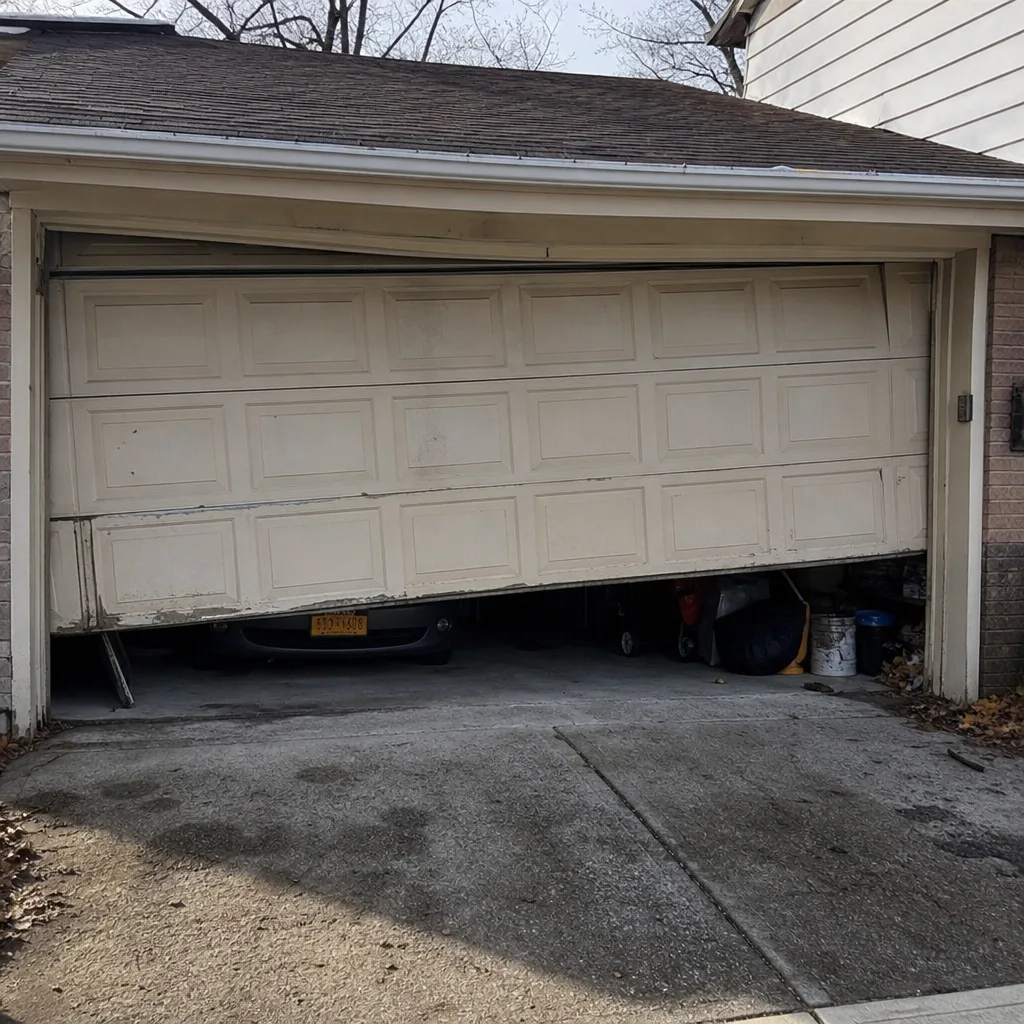 Before
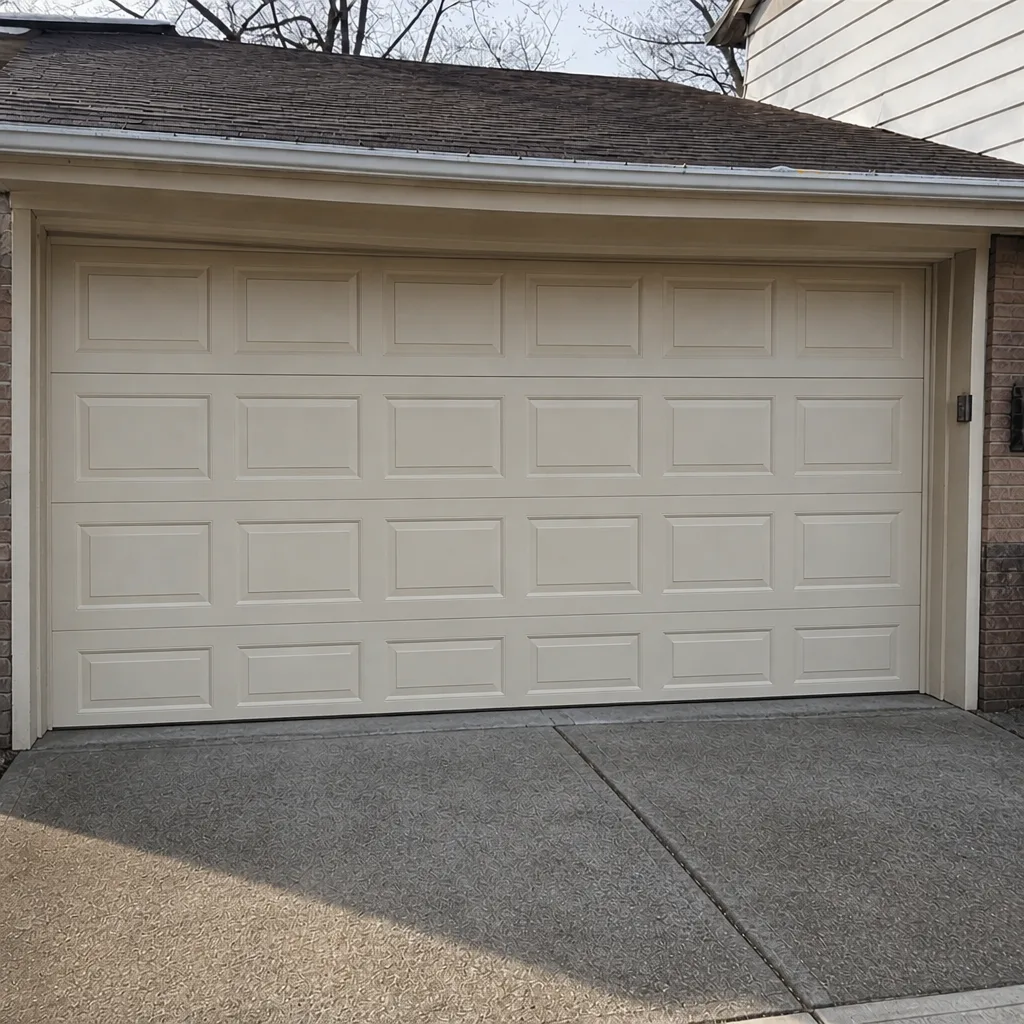 After
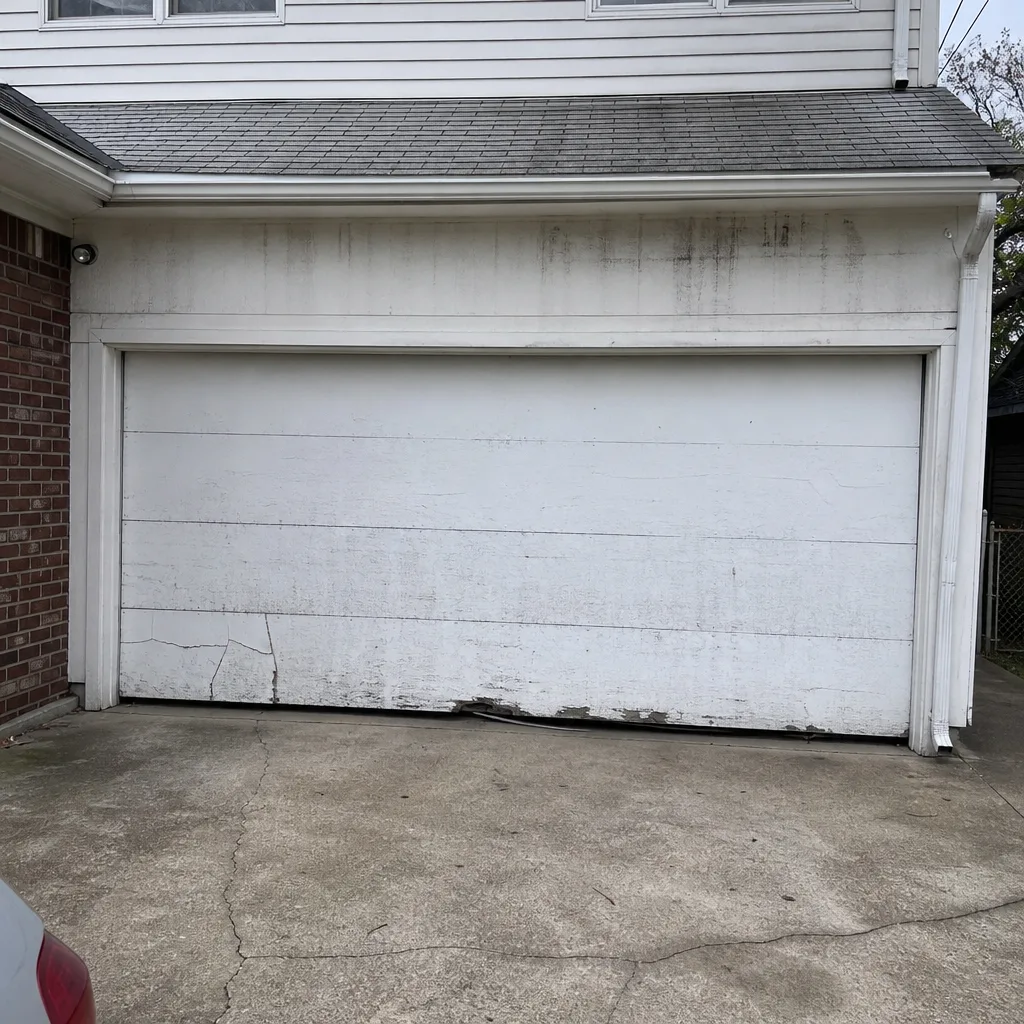 Before
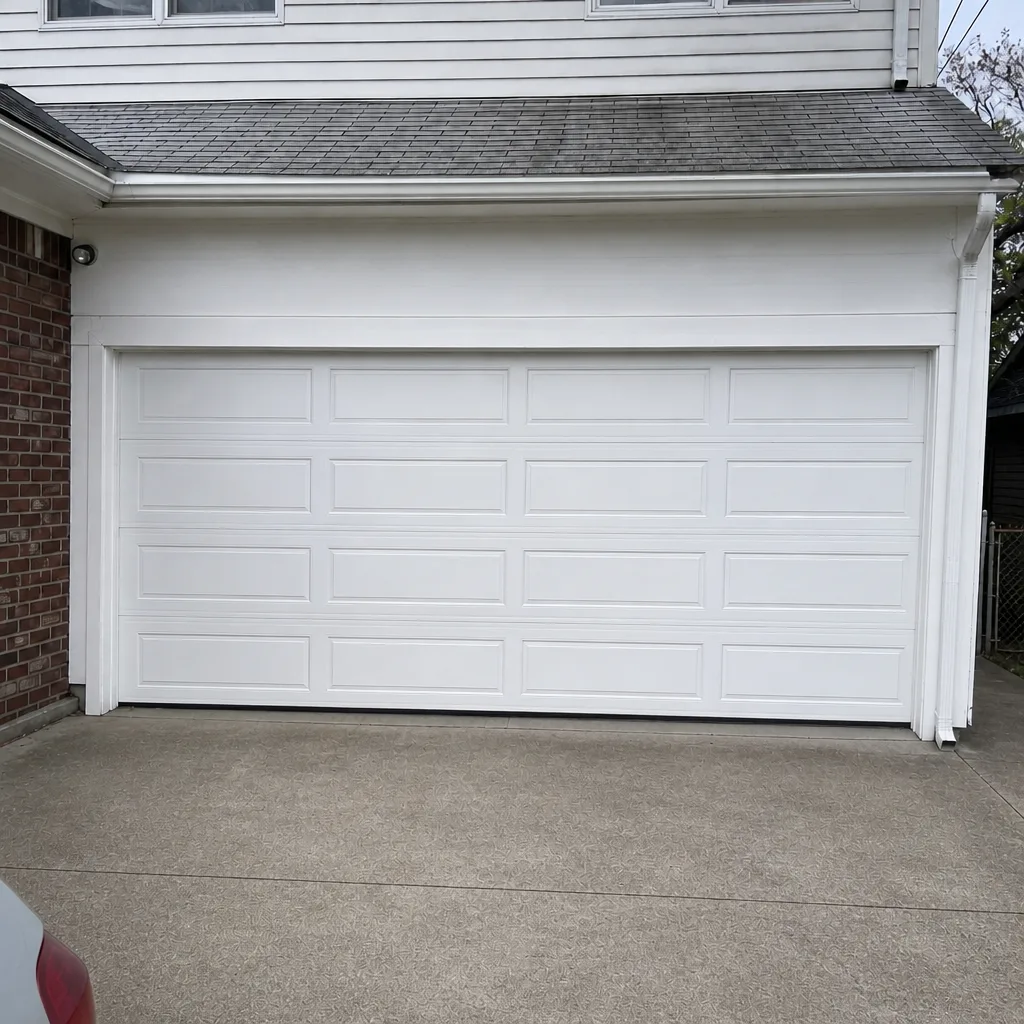 After
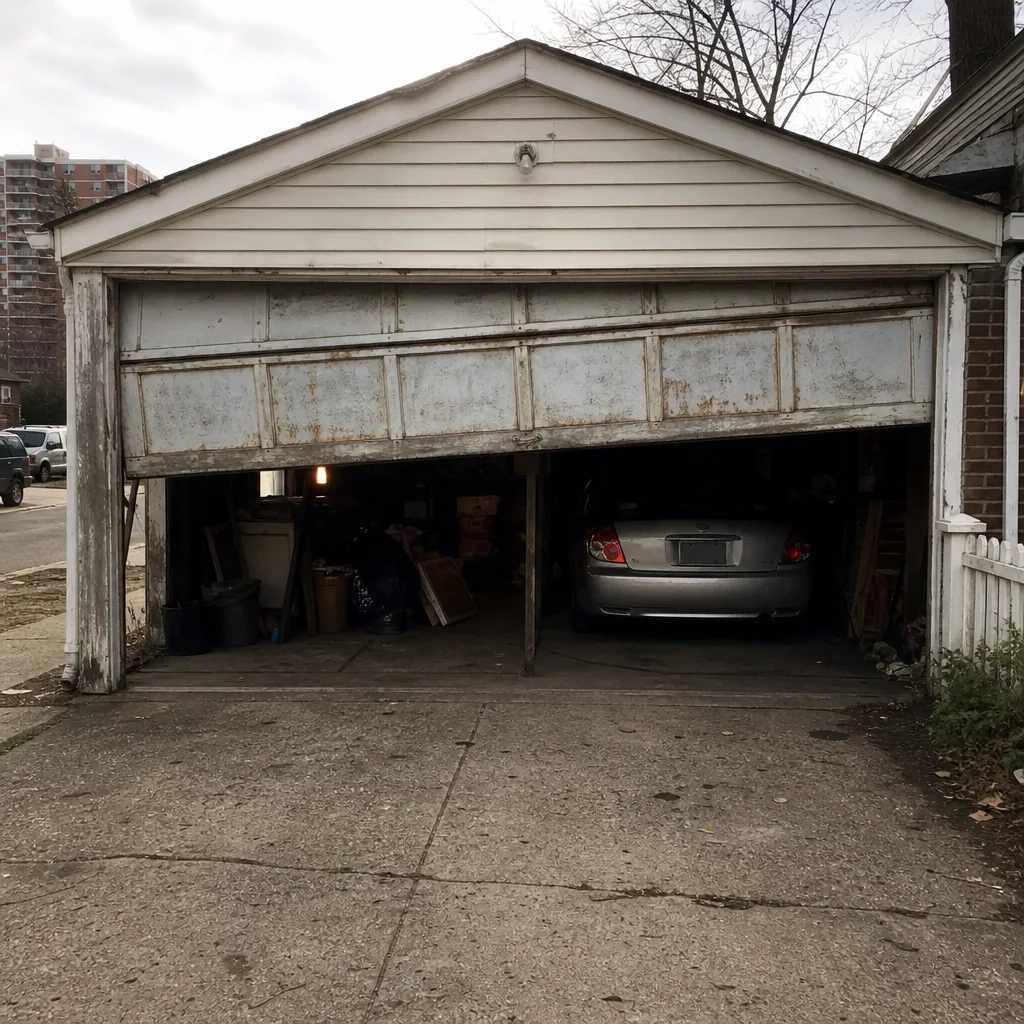 Before
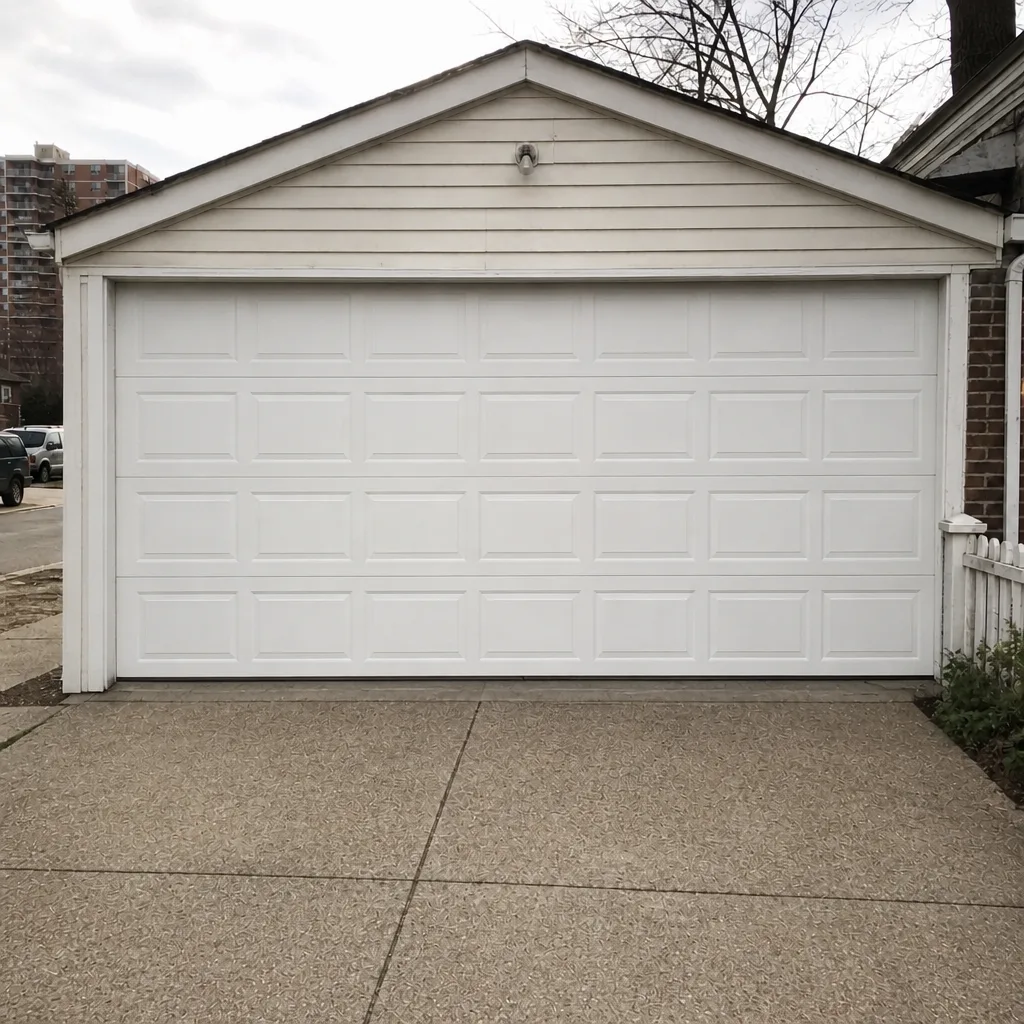 After
Springs: Safety-Critical, Not Routine
We treat spring repair differently from every other job. Torsion and extension springs are under heavy stored tension. A spring that lets go while someone is winding, unwinding, or handling the shaft can cause serious injury, and the shaft itself can spin with enough force to do real damage. That’s why springs are the one part of the door we don’t advise homeowners to adjust, replace, or “help” with.
Signs a spring needs professional attention:
- A loud bang from the garage followed by a door that feels much heavier than before.
- A visible gap in the torsion spring coil, or a stretched, sagging extension spring.
- The door rises partway and stops, or won’t lift without someone pulling the manual release.
- The door feels extremely heavy when lifted by hand after releasing the opener.
If any of these show up, use the manual release only if you can safely lift the door, and don’t operate it further until someone qualified has looked at it. We handle both torsion and extension springs with the right winding bars and the right training. This is a safety-critical service, not a part swap.
If you’re thinking about a full system replacement rather than a spring-only repair, garage door installation covers how that process runs from measurement to scheduled install.
Common Mistakes to Avoid
- Buying a door sized for a suburban garage. Standard panel widths assume a standard bay, and most Co-op City bays aren’t standard. Measure the opening first, or a door that looked right online arrives too wide.
- Ignoring headroom before ordering a low-headroom kit. A low-headroom conversion kit only works with the right dimensions; if your ceiling obstruction is in the wrong place, the door will bind.
- Trying to replace a spring yourself. This is the single most dangerous thing anyone can attempt on a garage door. A wound torsion spring can cause serious injury when it releases unexpectedly; leave the winding bars to a trained technician.
- Letting a loose track go. In a shared-wall Co-op City garage, a track that’s working loose rattles into the adjacent unit and eventually damages the door rollers. Fix it early.
- Upgrading the door without checking the opener. A heavier insulated door can overwhelm an old opener. If you’re going to a heavier panel, confirm the opener’s pull force and lift rating before you commit.
- Ignoring building or HOA rules on exterior color and panel style. A door that’s technically correct but doesn’t match the building standard can mean a re-do. Confirm what’s allowed before ordering a custom color.
- Calling a generalist with no brand knowledge. A technician who has to look up the manual on-site will need a second visit for parts. Identifying your brand and opener model before the call avoids that.
When to Call a Professional
Some garage door work is a video tutorial and fifteen minutes. Some of it needs a trained technician. Here’s where the line sits:
Call a professional immediately if a spring has snapped, a cable has slipped off its drum, the door is off its tracks, or the door has dropped and won’t lift safely. Those are the safety-critical failures. Call for a scheduled visit if the door is noisy, the opener reverses without cause, the sensors won’t align, or you’re ready to size a replacement.
In a Co-op City attached bay, we’d also add a call for any rattle or binding you can hear from a separate room. That’s often the loose track we mentioned earlier, and catching it early is far less expensive than replacing a bent track and worn rollers after it fails.
Garage Door Repair Co-op City offers free estimates in Co-op City. Call (844) 741-4548 and we’ll confirm what you have and what it needs.
Pricing You Can Expect in Co-op City
Prices here depend on bay size, spring type, track configuration, and brand, which is why a generic average is unhelpful. Here’s what a written estimate typically breaks down into, and remember the spring figures are per spring, with a matched pair roughly double:
| Job | What’s included |
|---|---|
| Spring repair (single torsion or extension) | One spring, wound and balanced, with a safety check on the rest of the system |
| Matched pair spring replacement | Two springs replaced together, balanced, with a full door cycle check |
| Door off tracks | Reset and re-aligned tracks, hinge and roller inspection, balance test |
| Opener repair | Diagnosis, part replacement, safety reverse and force test |
| Tune-up | Lubrication, track alignment, roller and hinge inspection, opener adjustment |
| Full door replacement | Measure, panel order, install, opener compatibility check, final balance and safety test |
The written estimate is the price. If something changes mid-job, for example the technician finds a broken cable while replacing a spring, we quote the added work before doing it, not after. Call (844) 741-4548 for a free estimate, and we’ll give you a clear figure in writing before any work starts.
Frequently Asked Questions
Spring repair cost depends on whether you have one torsion spring, a matched pair, or extension springs, and on the door size. The estimate covers one spring; a matched pair usually costs roughly twice that. We measure before quoting so the written price is the price. Call (844) 741-4548 for an exact quote, and estimates are free.
Most repair calls can be handled with same-day service when the parts are available and the fault is diagnosed over the phone or on site. Spring failures and doors off their tracks are the most common same-day fixes. Installation and full replacement aren’t same-day jobs; those need measurement and ordering. Call (844) 741-4548 to confirm what’s available for your case.
The written estimate is the price for the work quoted. If the technician finds a related fault mid-job, we stop and quote the added work before doing it, and you decide. We don’t surprise you with a bigger invoice than the one you agreed to.
We’re qualified on eight major lines: LiftMaster, Chamberlain, Genie, Clopay, Amarr, Wayne Dalton, Craftsman, and Raynor. That covers both the door hardware and the opener drive system, so one call handles the full job. If your label is faded, check the door panel and opener head for a manufacturer’s sticker before you call.
Many attached and semi-attached Co-op City garages have lower ceilings than a standalone suburban garage, so low-headroom torsion or extension configurations are often required. It isn’t universal; a measurement decides it. During the free estimate we measure headroom, backroom, and side room, then recommend the correct spring and track set-up for your bay.
The local professional we connect you with is licensed and insured as their state and city require. Our technicians have up to 10 years of experience on the major door and opener brands, and we handle spring repair with proper winding tools and safety procedures. Call (844) 741-4548 to confirm details for your job.
The Bottom Line
Co-op City garages are tighter, more attached, and more demanding than the suburban template most guides assume. Headroom and backroom come first, then spring configuration, then noise. Sectional doors suit most townhome and semi-attached bays; roll-up doors solve the tightest basement-style bays. Knowing whether you own a LiftMaster, Chamberlain, Craftsman, Raynor, or another brand cuts the diagnostic time and prevents return visits for the wrong part. Springs are the one job to never attempt yourself. And any price is a written estimate before work starts. For the full service picture across repair, springs, openers, and replacement, start with Garage Door Repair Co-op City.
When you’re ready for a free estimate on your Co-op City garage door, call (844) 741-4548. We’ll measure your bay, confirm your brand, and give you a written price before any work begins.
Written by the team at Garage Door Repair Co-op City.